The Buyer's Guide to Cyber Resilience for Cloud Applications
Learn how your DR plan should look like
What you'll get from this guide
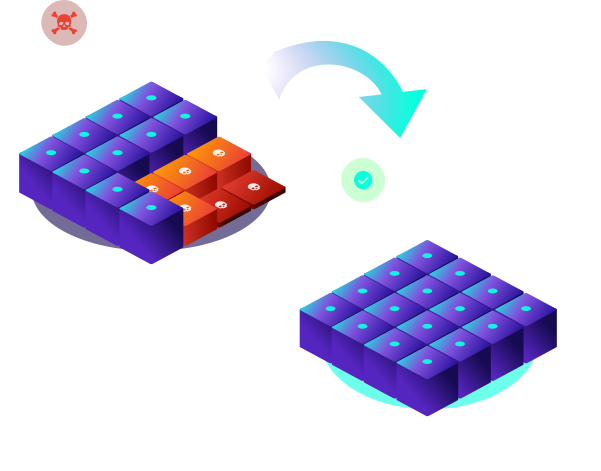
Now add AI agents that can provision, modify and delete infrastructure in seconds, and cyberattacks built to corrupt configurations and wipe environments outright. The exposure is no longer data loss. It's weeks of downtime, missed RTO commitments, and regulators asking questions you can't answer.
This guide is written for the people who own that risk. It explains why backup alone leaves the business exposed, what to look for when evaluating recovery vendors, and the DR strategy leading enterprises are using to strengthen their estate, recover complete environments in minutes, and prove it to every regulator.
About Firefly
here’s what’s inside • here’s what’s inside• here’s what’s inside • here’s what’s inside • here’s what’s inside • here’s what’s inside • here’s what’s inside • here’s what’s inside • here’s what’s inside • here’s what’s inside • here’s what’s inside • here’s what’s inside •
The Hidden Crisis in Disaster Recovery
Gartner predicts that by 2030, 35% of organizations will utilize CAIRS solutions to complement infrastructure-as-code disaster recovery orchestration, up from less than 5% in 2026, a 10× jump.
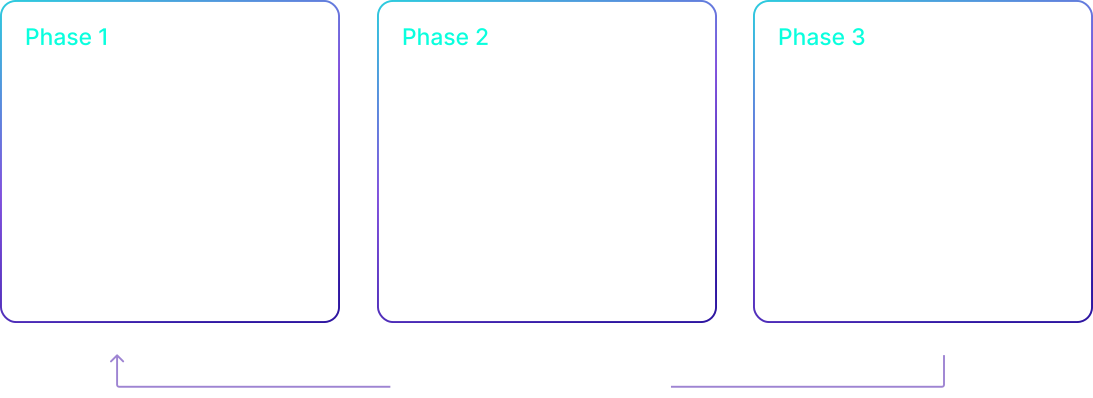
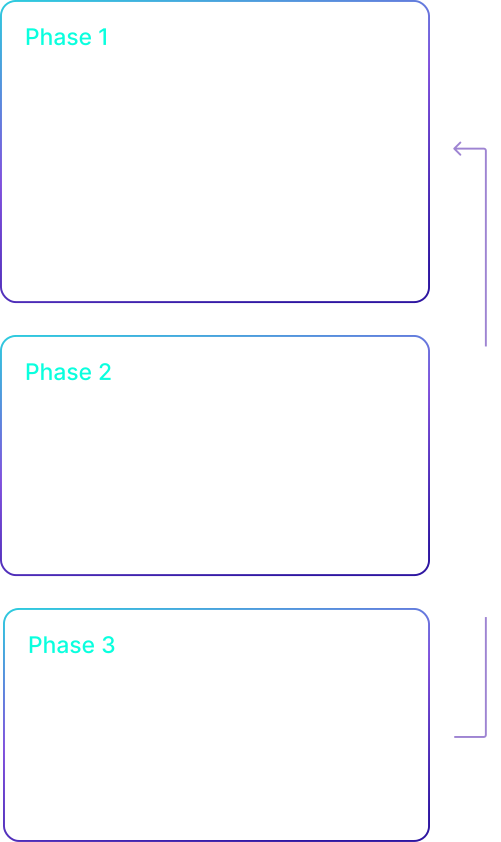
From Backup to Resilience, in 3 Phases
What resilience looks like in 2026 and beyond
01. Cyber resilience replaces breach prevention as the primary security KPI
Boards are already shifting investment from 'stop every attack' to 'recover from any attack.' Assume-breach becomes the default operating mode, and recovery speed becomes the number auditors, insurers, and CFOs actually track.
02. Infrastructure recovery becomes a standard line item in the DR stack
Gartner projects a 10× jump in CAIRS adoption by 2030. Expect procurement checklists, RFPs, and cyber-insurance questionnaires to explicitly ask how you rebuild infrastructure, not just how you back up data.
03. AI agents force codified guardrails on every environment
Agents that provision, modify, and destroy infrastructure at machine speed make undocumented environments untenable. Teams without executable blueprints and blast-radius controls will lose the ability to safely deploy agents at all.
04. RTOs collapse from days to under an hour
2-6 hour RTOs are already contractual for most enterprises. The teams treating recovery as software — tested weekly, deployed in minutes — will set a new bar.
Stop backing up just data. Start rebuilding your infra.
See what leading enterprises are doing to cut recovery from weeks to under an hour, and what to demand from any vendor before you sign.