.png)
TL;DR
- Cloud resilience broke down not because failures got more common, but because infrastructure scaled past what any team can track by hand; this is the root cause, not AI hype.
- Automation and AI aren't the same tool: automation handles known problems with pre-written rules, while AI's real value is in diagnosing ambiguous signals and deciding on a fix; the two jobs split cleanly across the detect, diagnose, decide, remediate cycle.
- Full autonomy is genuinely risky on novel incidents; overconfident fixes, machine-speed alert fatigue, and untraceable changes are the real failure modes, not hypothetical ones.
- Shadow mode, letting new remediation logic log what it would do without acting, is how mature teams earn trust before giving AI write access to production.
- None of this works without visibility first: a system can't safely fix drift it doesn't know exists, which is exactly the gap Firefly's System of Record and CRPM are built to close.
Cloud outages are no longer rare, isolated events. On May 7, 2026, a cooling failure in a single AWS data center hall in Northern Virginia took Coinbase offline for roughly seven hours, along with FanDuel and CME Group. It wasn't a software bug; multiple chiller units physically failed, and there was no failover button: engineers had to restore cooling before anything could come back online, regardless of how the applications on top were architected. It's the third major failure in that same AWS region since 2021. Azure and Cloudflare have both had their own major outages in the past year too.
As infrastructure keeps growing across more regions, more providers, and more automated deployments, the old approach of manually watching and fixing things has stopped scaling, which is exactly why AI and automation have entered the resilience conversation so quickly.
This piece breaks down what works. It covers where rule-based automation is already proven, where AI genuinely adds value versus where full autonomy gets risky, how teams build trust in automated systems before giving them control, and why none of it works without accurate visibility into what's running in the first place.
What is Cloud Resilience?
Cloud resilience is a system's ability to keep working, or recover quickly, when something breaks; in practice, that means the applications, data, and infrastructure a business depends on can absorb a failure without grinding to a halt and come back online fast enough that the disruption stays small. It's not about preventing every possible failure, since failures in a cloud environment are almost guaranteed at some point given how many moving parts are involved; resilience is about how well a system handles that moment when it comes.
It comes down to three things:
- Availability means the system stays up and usable, even while something in the background is going wrong.
- Recoverability means that if the system does go down, it comes back quickly. This is the space disaster recovery lives in.
- Consistency means the system doesn't end up in a broken or half-changed state, where some parts reflect an update and others don't.
A resilient cloud environment holds up against things like:
- A server going down
- A bad deployment
- A misconfigured setting
- A sudden spike in traffic
- A security breach
- An entire cloud region going offline
Surviving failure has never been a new problem, and every system has needed some way to handle things going wrong long before the cloud existed. What has changed is the setting, and that shift is worth slowing down for, because it's the real reason resilience became such a pressing concern.
Why Cloud Resilience Became So Much Harder To Manage
A few decades ago, infrastructure meant a handful of physical servers sitting in a data center somewhere. A team could realistically walk over, check on them, and know exactly what was running and how it was configured, since the whole setup was small enough to hold in your head.
The cloud changed that completely. A modern environment can easily involve:
- Hundreds or thousands of resources across servers, databases, storage, and networking
- Most of it defined as code rather than set up by hand
- Resources spun up or torn down automatically as needs shift, often without a person directly involved
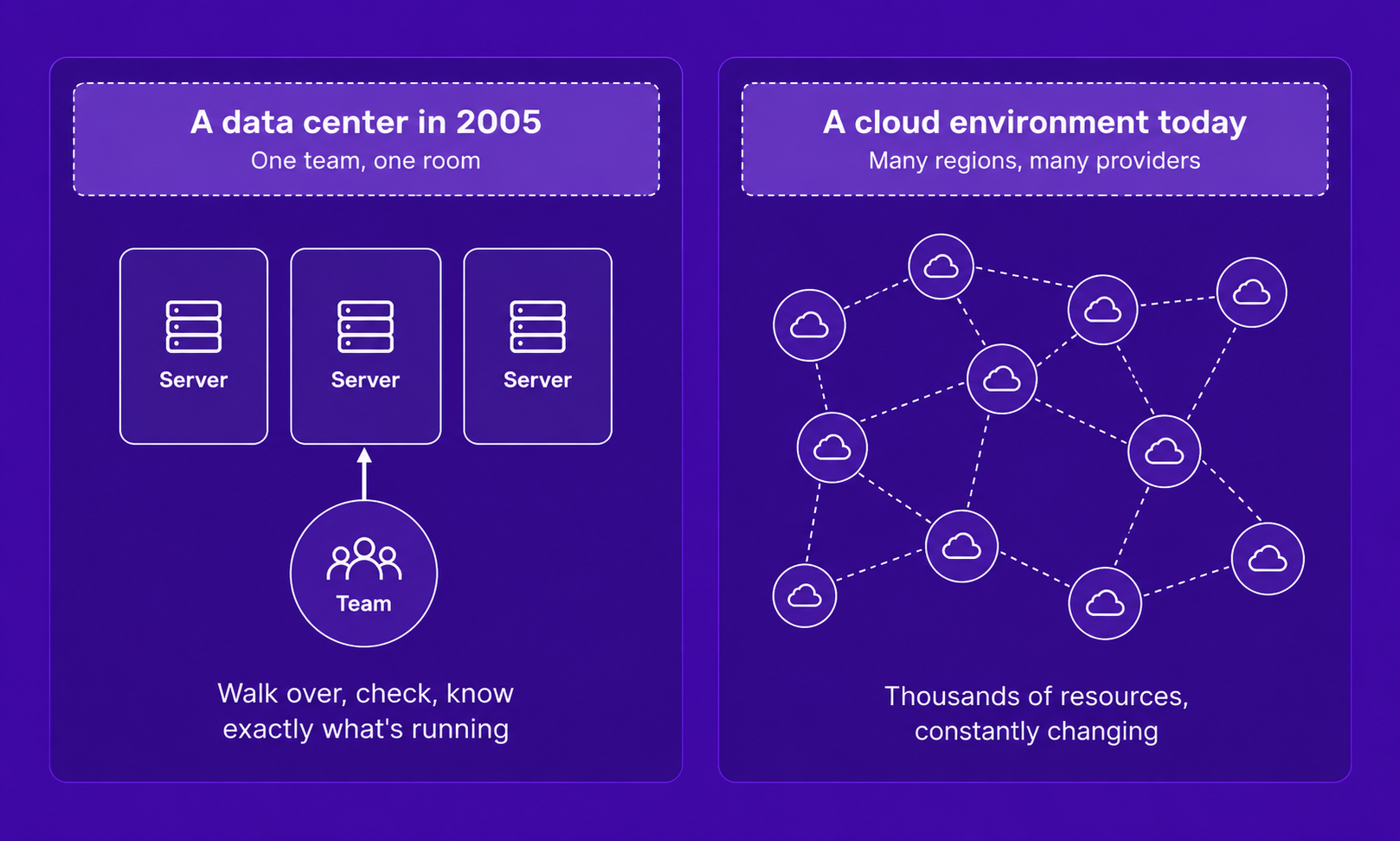
That scale is exactly where things start to break down. Nobody can manually track whether every one of those resources is still configured the way it's supposed to be, especially once multiple regions, multiple cloud providers, and teams making changes independently enter the picture.
The real problem underneath cloud resilience today isn't that failures happen. Failures have always happened. It's that humans can no longer keep up with monitoring and fixing configuration and infrastructure at the pace and scale the cloud now operates at.
This is also where the term drift starts to matter, since infrastructure that was set up correctly on day one doesn't necessarily stay that way. A few common ways it happens:
- A setting gets changed manually during an incident and never gets reverted
- A resource gets created outside the normal process because someone needed to move fast
- Small, undocumented changes accumulate over time until nobody has a full picture anymore
None of these are dramatic failures on their own. At scale, though, they add up into an environment nobody fully understands. That's the gap automation stepped in to close, before AI ever entered the picture.
Where AI Enters the Cloud Resilience Picture
Automation was the first response to this scale problem, and for a long time it was the only one. Teams wrote rules to catch failures they'd already seen before and handle them without waiting on a person.
That approach still works well for a lot of cases, but it has an obvious limit: it only knows what it's been told to look for. AI has entered cloud resilience specifically to work on the cases that fall outside that limit.
A few places this already shows up in practice:
- Alert triage. Monitoring tools use AI to sift through the flood of alerts a large cloud environment throws off, surfacing the handful that actually matter instead of leaving a person to go through hundreds by hand.
- Anomaly detection. Systems learn what “normal” looks like for a given environment and flag activity that deviates from it, even when that activity doesn't match any rule anyone thought to write.
- Predictive risk scoring. Some platforms use AI to flag that a specific change is likely to cause problems before it's even deployed, based on patterns from past incidents.
- Root cause correlation. When something does go wrong, AI helps correlate signals across many different systems at once, cutting down the time it takes to find the actual cause.
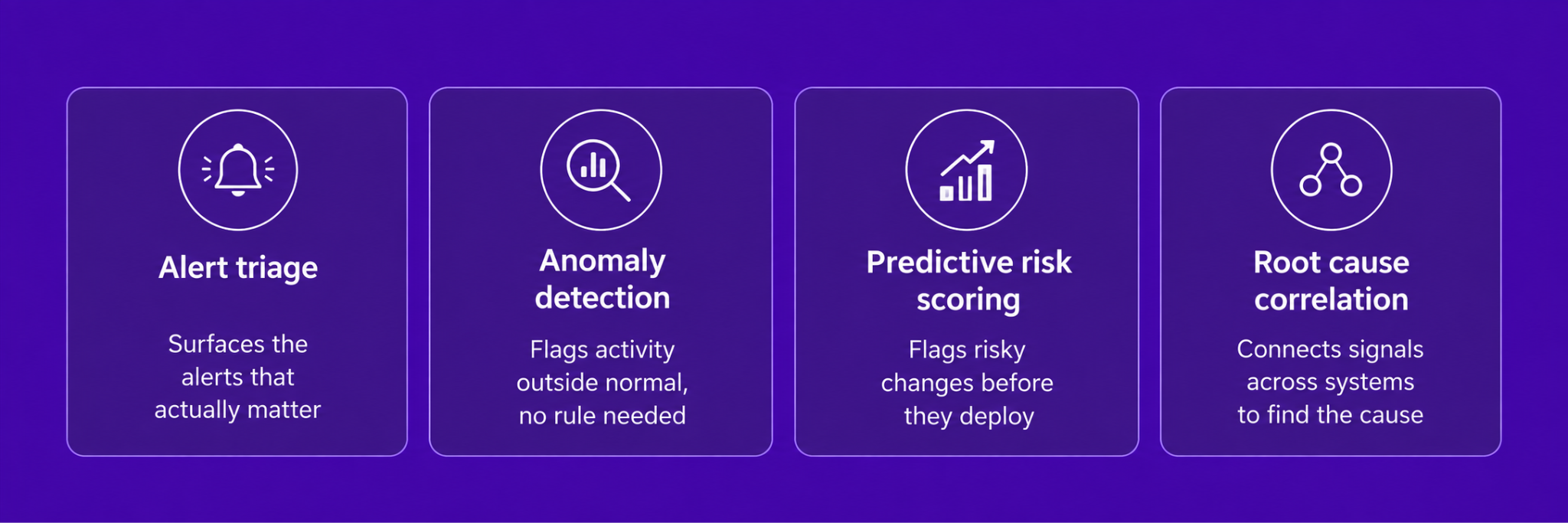
None of this replaces the rule-based automation already in place. It sits alongside it, taking on the work rules were never well suited for.
That relationship is specific enough to warrant a closer look.
What's the Difference Between Automation and AI in Cloud Resilience?
It's a fair question, since the two terms get used interchangeably in a lot of cloud resilience content, when they're actually solving different parts of the problem.
Automation, in its simplest form, is a system that follows pre-written rules. If CPU usage crosses 90 percent, add another server. If a resource drifts from its defined configuration, flag it or revert it. These rules work because the problem and its fix are already known, and the system just applies that fix fast enough and consistently enough that a human doesn't have to.
AI enters where that approach runs out of road, since not every problem fits a clean rule. AI-driven resilience is less about following instructions and more about recognizing patterns and making judgment calls on situations without an obvious, pre-written answer.
The clearest way to see the difference is against the four stages every resilience system moves through:
- Detect: notice something is wrong
- Diagnose: figure out why it's wrong
- Decide: choose the right fix
- Remediate: actually apply it
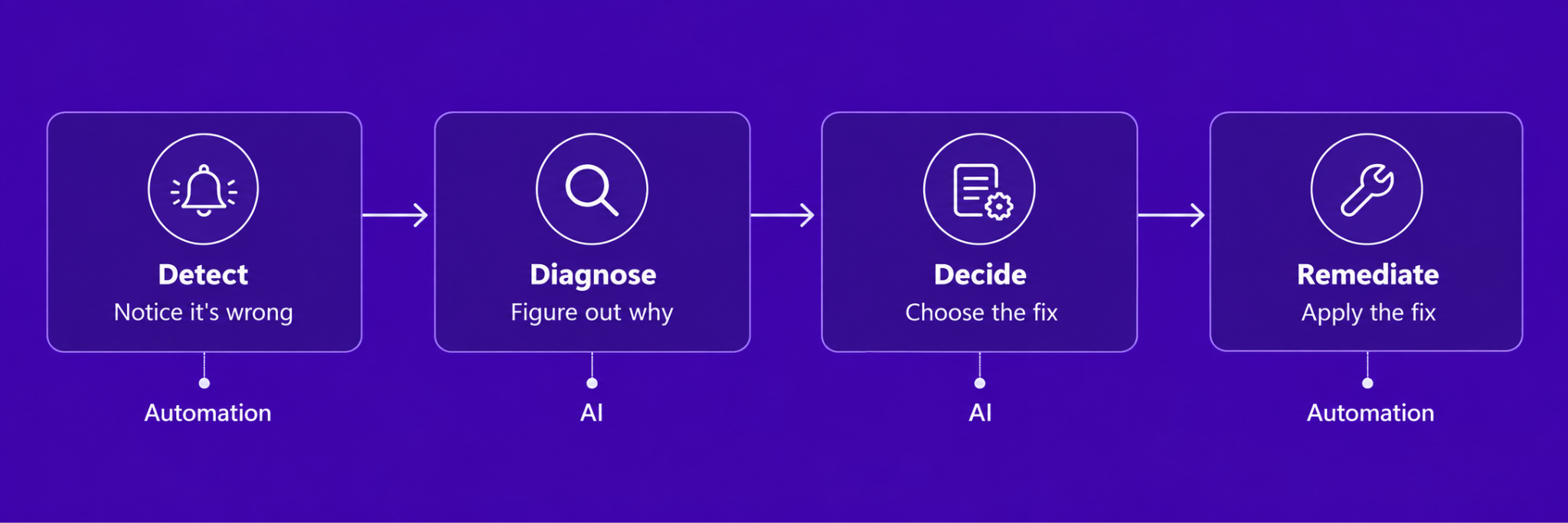
Rule-based automation tends to be strong at detecting known problems and remediating them once a fix is decided. AI's real value shows up in the diagnose and decide stages, the parts that require reasoning through messy, ambiguous signals rather than matching a pattern to a rule.
That distinction is what the rest of this piece builds on.
Where Full AI Autonomy Creates New Failure Modes
The diagnose and decide stages are exactly where AI adds real value, but they're also where things go wrong if a system is given more autonomy than it's actually earned. Not every failure is a known problem with a known fix. Some are genuinely new: a first-of-its-kind incident, an unusual combination of factors, a bug or attack nobody has seen the shape of before.
That's where full autonomy gets risky. A few honest failure modes worth knowing:
- Overconfident remediation. A system acts on a pattern that looks familiar but isn't quite the same situation, and the fix makes things worse.
- Alert fatigue at machine speed. Automated remediation can fire on false positives faster than any person could catch and stop it, turning a minor blip into a real incident.
- No clear accountability. When a fix was applied automatically and something breaks downstream, it can be genuinely hard to trace what changed, why, and who or what decided to make that change.
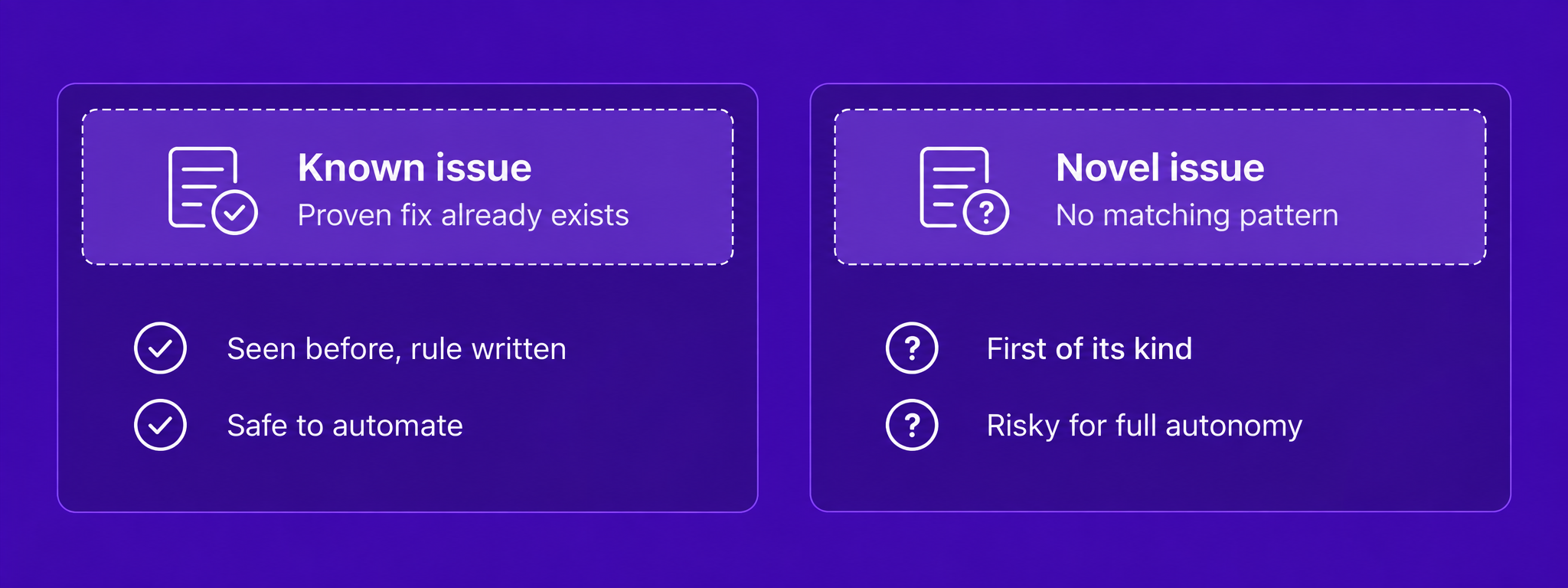
None of this means AI shouldn't act on infrastructure. It means the trust a system is given should match how well it's been proven, not how capable it sounds. That's a solvable problem, and the next section gets into exactly how teams solve it.
Shadow Mode and Guardrails: How AI Earns Write Access
The honest answer to “how do you trust a machine to fix your infrastructure without breaking it worse” comes down to not giving it that trust all at once.
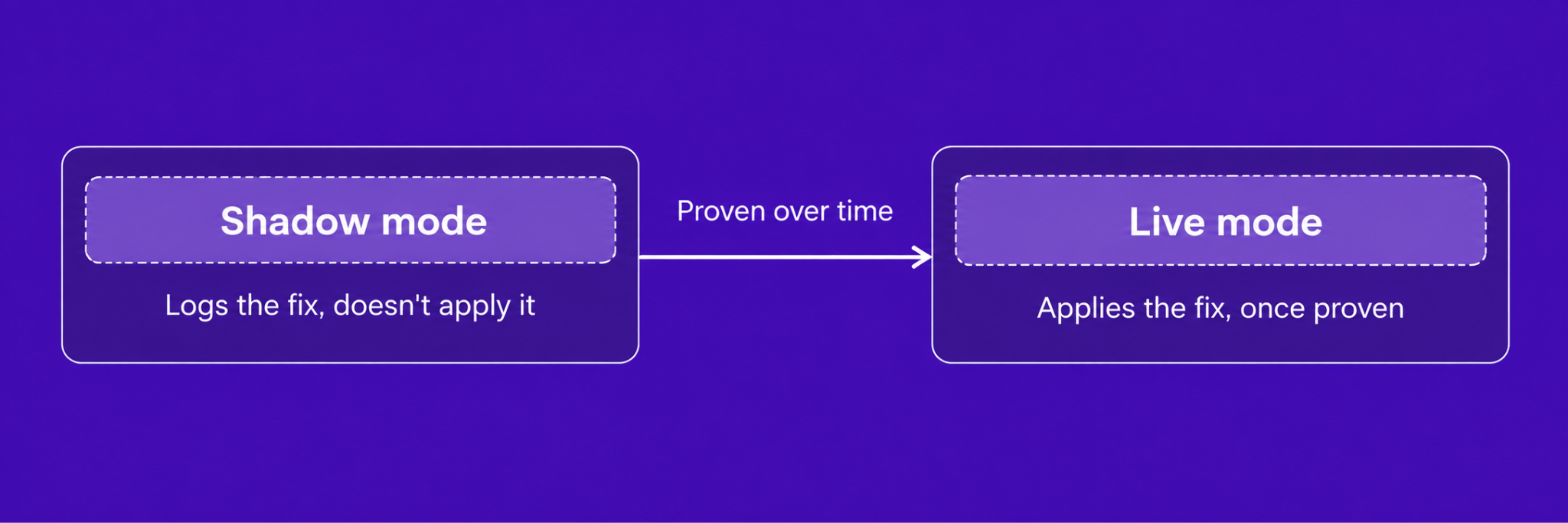
Shadow mode is the concrete practice most mature teams rely on. New automated remediation logic runs in parallel with real production traffic, logging what it would have done without actually doing it. Only once that logic has proven itself over time does it get allowed to act live. It's the difference between watching a system think out loud and handing it the keys on day one.
Governance is the other half of this. A few things worth having in place before automated remediation touches production:
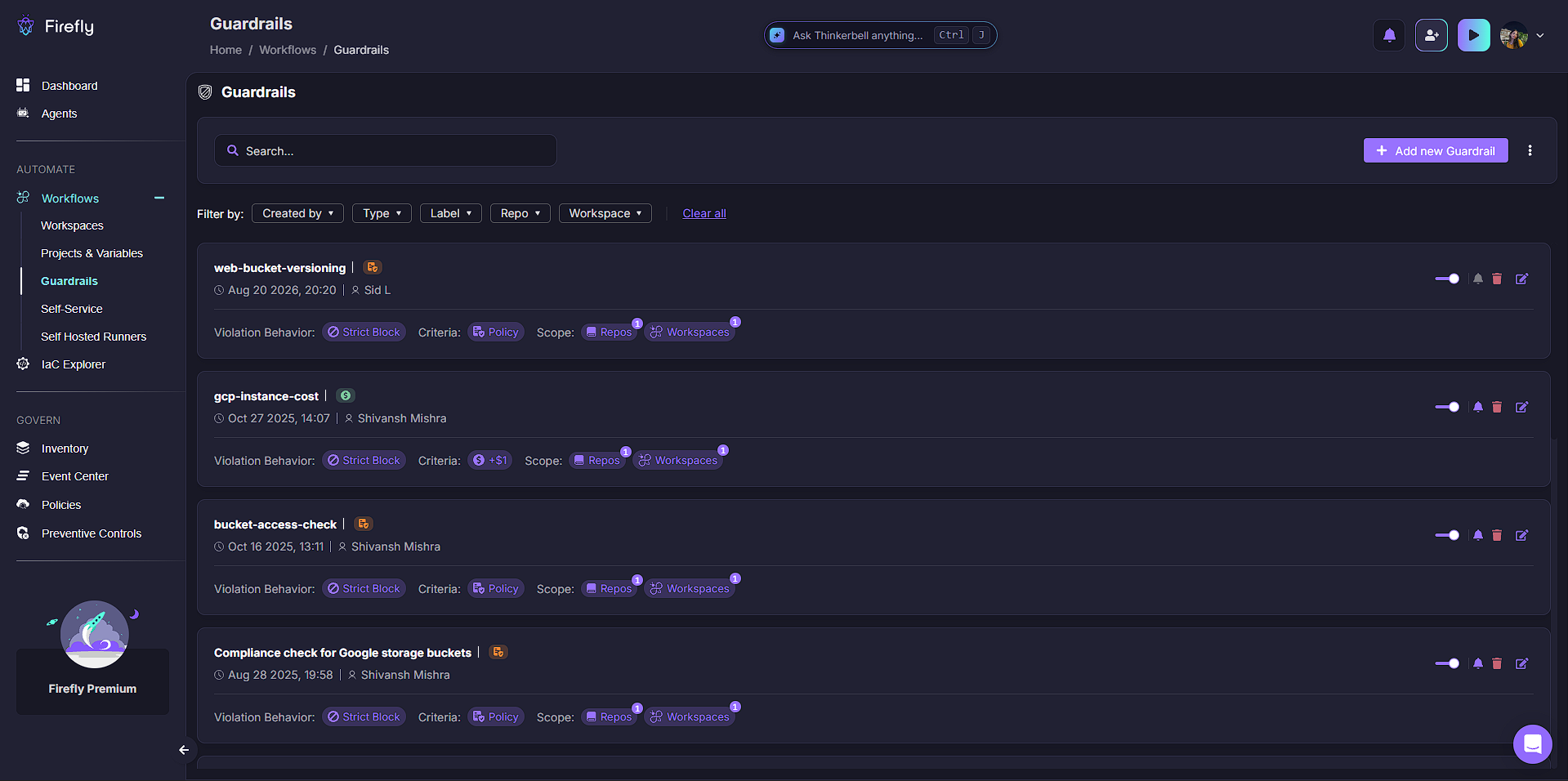
- Policy-as-code guardrails, so any fix a system applies still has to comply with the organization's actual rules, not just solve the immediate problem
- Full audit trails, so there's always a record of exactly what changed, why, and what triggered it
- A clear line between known and novel issues, so automation only acts alone on the problems it's actually proven itself against
None of this is about slowing AI down for its own sake. It's about making sure the system earns the level of trust it operates with, the same standard any new team member would be held to.
Drift, Visibility, and Why Automation Needs a Starting Point
Everything covered so far rules-based automation, AI-driven diagnosis, shadow mode, governance rests on one assumption that's easy to skip past: the system doing the automating actually knows what your infrastructure looks like right now.
That assumption breaks more often than it should. Infrastructure drifts. A setting gets changed manually during an incident and never gets reverted. A resource gets created outside the normal process because someone needed to move fast. Over time, what's actually running in the cloud stops matching what anyone's records say should be running.
Automating on top of that gap is where things go wrong, and not because the automation itself is flawed:
- A system can't fix drift it doesn't know exists
- A system can't safely apply a known-good fix if it's working from an outdated picture of the environment
- A system can't be trusted with more autonomy if nobody can verify what it actually changed against what was really there before
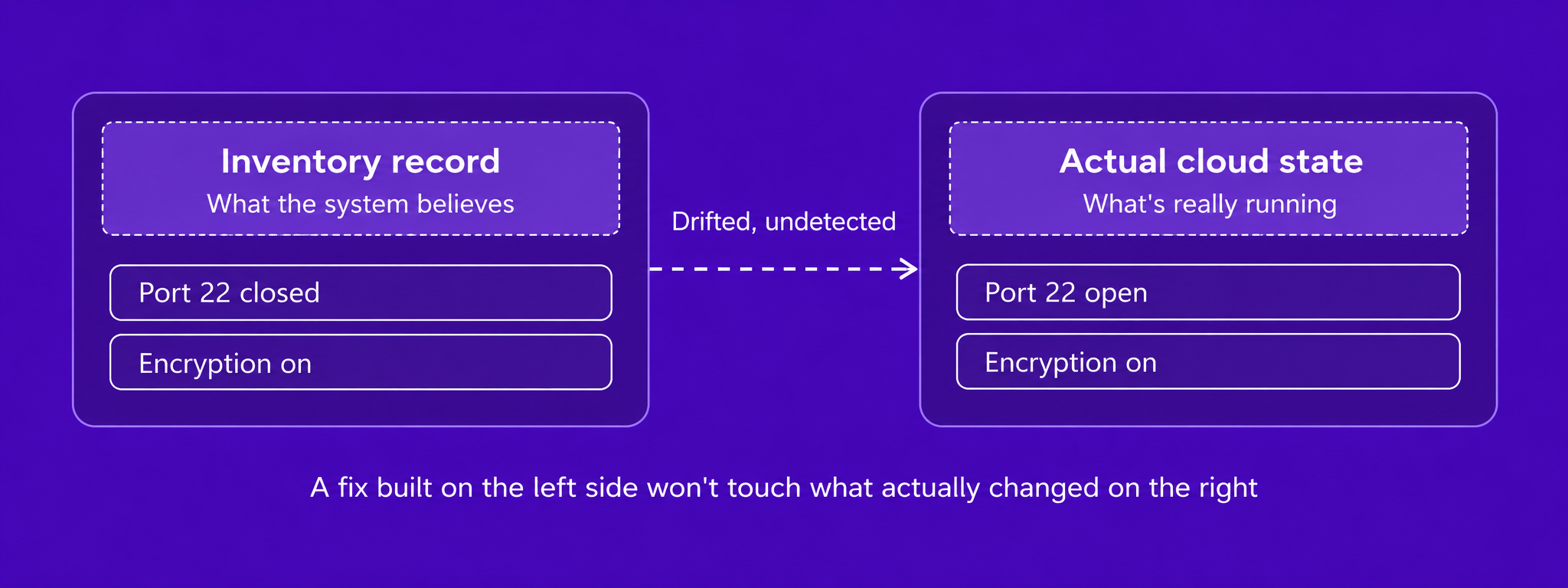
This is the part of cloud resilience that gets skipped in a lot of AI-focused coverage, because it isn't as exciting as autonomous remediation. But it's the actual foundation everything else depends on. Before a system can safely detect, diagnose, decide, and remediate, it needs an accurate, continuously updated picture of what it's working with. That's not a feature automation adds on top. It's the precondition for automation being safe at all.
How Does Firefly Put Visibility-First Resilience Into Practice?
The argument so far comes down to one line: automation is only as safe as the visibility it's built on. Firefly is built around that exact idea, positioned as an automated cloud resilience platform rather than a single-purpose drift detector or IaC generator. The pitch is recovering full cloud environments from outages and cyberattacks in minutes, using infrastructure as code as the actual recovery mechanism, while keeping everything governed and audit-ready along the way.
Firefly organizes this around three connected jobs, and the order matters. Automate standardizes how infrastructure gets delivered in the first place, through IaC orchestration and GitOps, so environments start out consistent. Govern is where visibility lives: Firefly continuously scans the entire cloud footprint and maintains what it calls a System of Record, a real-time, always-current map of every resource, its dependencies, and whether it matches its intended configuration. Recover is what all of that visibility makes possible, automatically rebuilding full environments with dependencies intact, in minutes, without a human writing a manual runbook mid-incident.
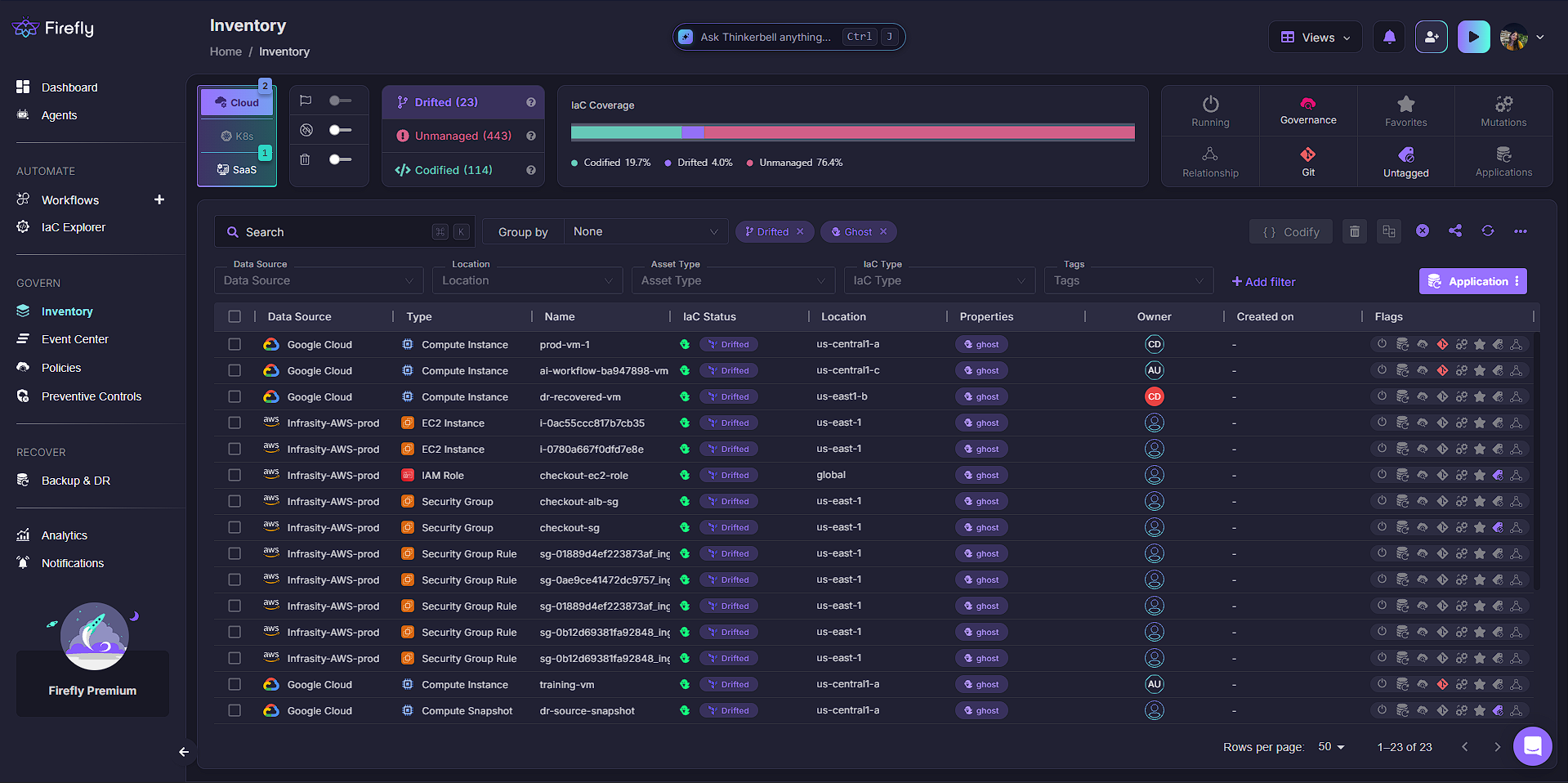
- A System of Record. A continuously updated, real-time picture of everything running across a cloud environment, including which resources are Codified (fully IaC-managed), which have Drifted from their defined configuration, and which are Unmanaged.
- Policy enforcement that runs before problems ship. Firefly's Guardrails evaluate a Terraform plan against policy, cost, resource, and tagging rules before anything gets applied, and Thinkerbell AI, Firefly's agentic layer, can answer natural-language questions about the environment and suggest remediation for the violations it finds.
- Cloud Resilience Posture Management (CRPM). Rather than treating resilience as a one-time audit, CRPM continuously answers the questions this piece has been building toward: which resources are actually protected, whether infrastructure can be rebuilt fast enough to matter, and whether drift has quietly put a recovery plan at risk before anyone noticed.
- The AI Disaster Recovery Agent. A dedicated agent that autonomously discovers, backs up, and restores full cloud infrastructure configurations, drawing on the same System of Record rather than a separate, potentially stale inventory. It's the core of Firefly's disaster recovery and cyber resilience use cases.
What ties these together is that none of them operate on a guess. When Firefly's automation remediates drift, enforces a Guardrail, or rebuilds an environment after an outage, it's acting on the same governed, up-to-date picture the System of Record maintains, not a snapshot that might already be stale. That's the practical version of the argument this piece has been making: visibility first, automation second.
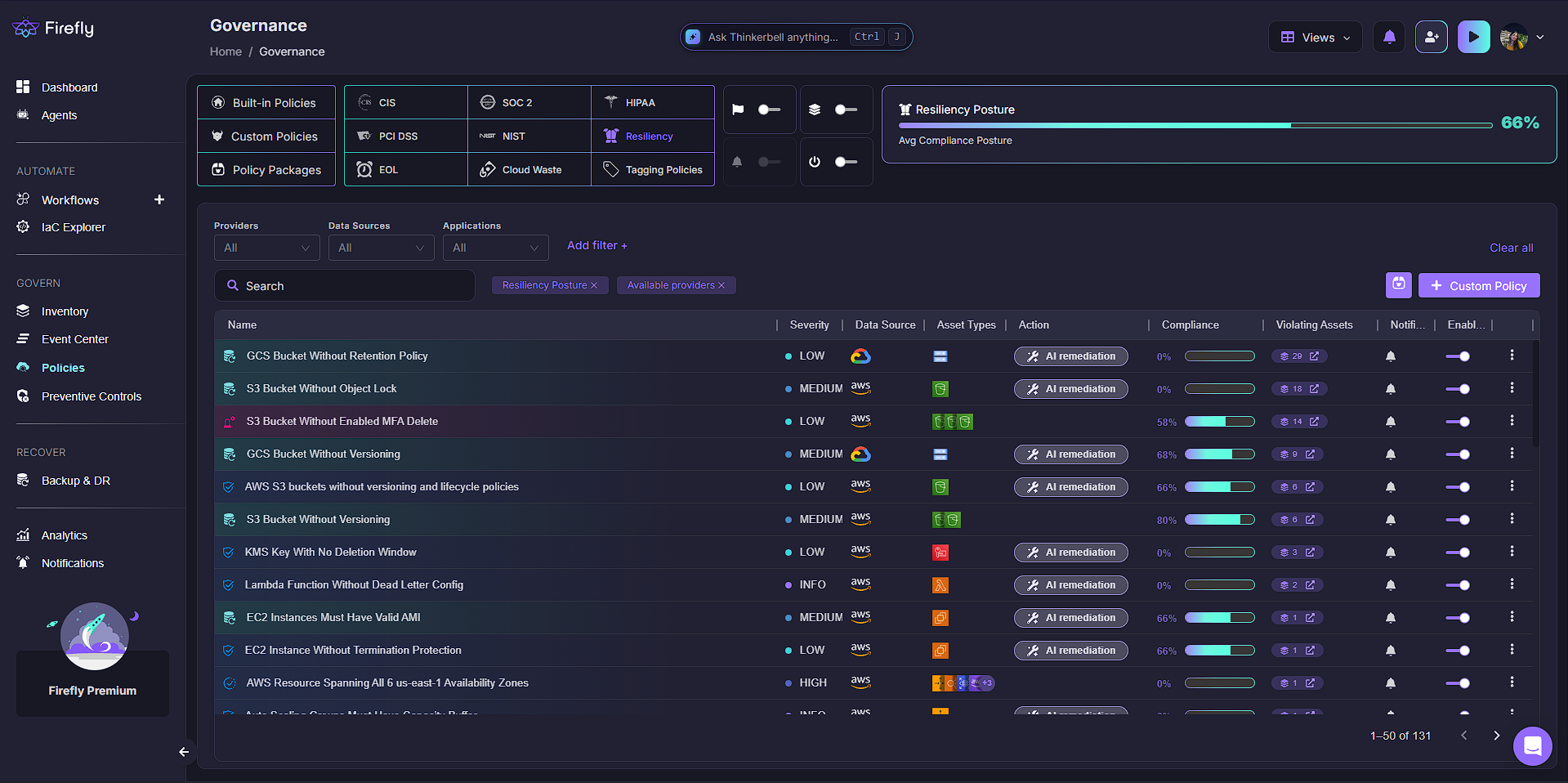
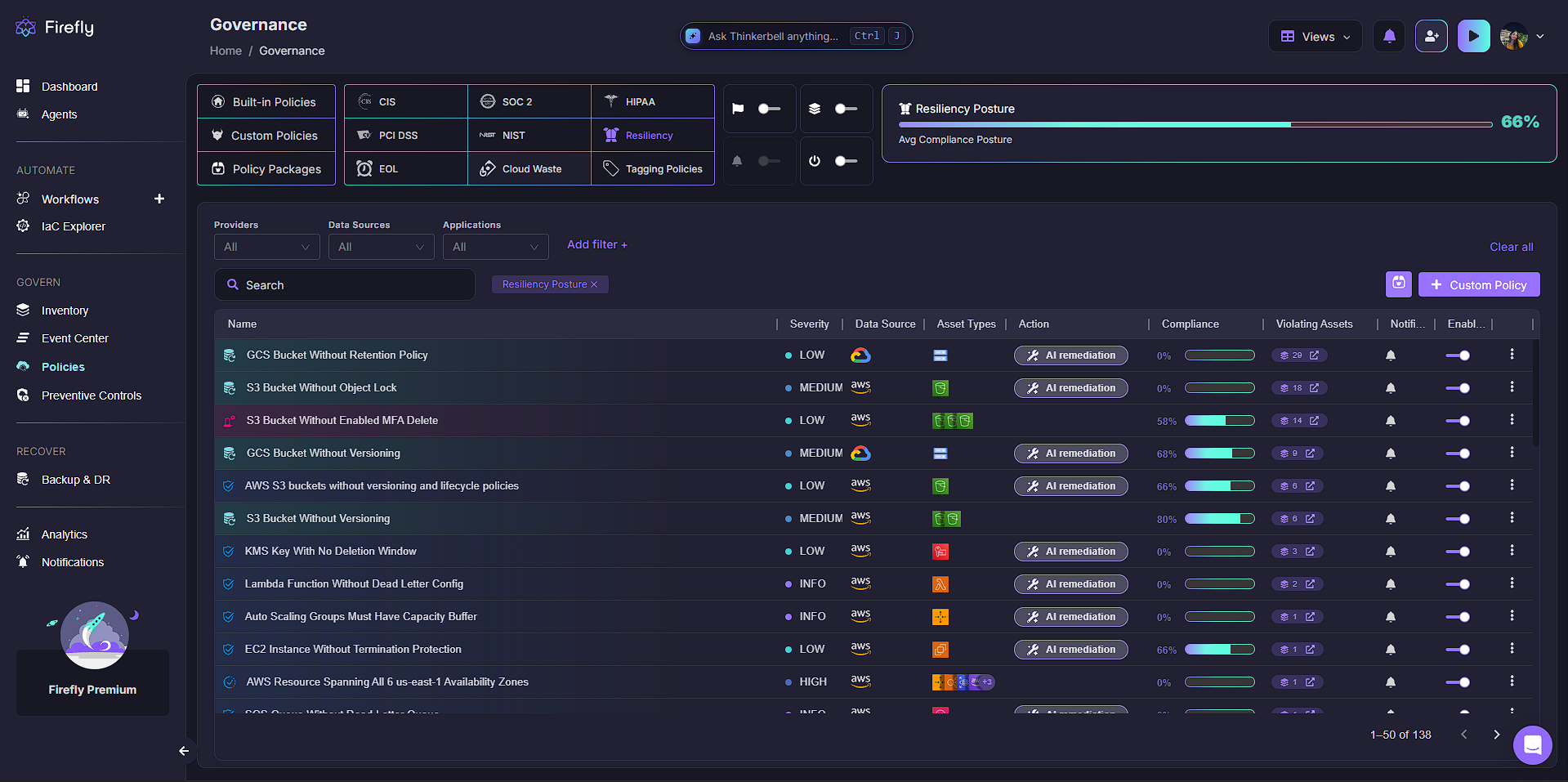
The dashboard above is what that combination looks like in practice. Instead of resilience being something a team assesses after an incident, Firefly surfaces it as a live, continuously updated score, alongside exactly which resources are exposed and what they're worth if something goes wrong. That's the difference between automation that's genuinely trustworthy and automation that's just fast.
Measuring Whether AI Resilience Is Working: MTTD and MTTR
Strip away the hype on either side and the honest answer is straightforward: automation earns trust on known problems first, and AI's real value sits in the judgment-heavy work of diagnosing and deciding, not in acting alone on things nobody's seen before.
A few markers worth tracking if you want to know whether this is actually working, rather than just sounding good in a pitch:
- Mean Time to Detect (MTTD), the average time between something breaking and someone or something noticing
- Mean Time to Resolution (MTTR), the average time between noticing and actually fixing it
These two numbers matter more than any general claim about “improved resilience,” because they're the ones a team can actually measure before and after adopting any automation or AI tooling. If MTTD and MTTR aren't moving, the tooling isn't doing its job, regardless of how it's described.
Where This Leaves Teams Building for Cloud Resilience
Cloud resilience broke down because infrastructure outgrew what any team could track by hand, not because failures got more common. Automation stepped in first, and it's genuinely proven for known problems: auto-remediation, predictive scaling, automated failover. AI adds real value on top of that, especially in diagnosing ambiguous signals and deciding on a fix, but it earns that trust gradually through practices like shadow mode and policy guardrails, rather than being handed full autonomy on day one. None of it works without visibility first. A system can't safely fix drift it doesn't know exists, which is exactly the gap a System of Record and continuous posture management like Firefly's CRPM are built to close.
For a deeper look at where this piece's central idea comes from, read the From Backup to Recovery post, or explore Firefly's disaster recovery use case to see how automated remediation and recovery work together in practice.
FAQs
What is the difference between cloud resilience and disaster recovery?
Disaster recovery is one part of cloud resilience, specifically the recoverability piece. Cloud resilience also covers availability and consistency, meaning it includes staying up in the first place, not just recovering after a failure.
Is AI the same thing as automation in cloud resilience?
No. Automation follows pre-written rules for known problems. AI recognizes patterns and makes judgment calls on situations that don't have an obvious, pre-written answer, which is most useful in diagnosing and deciding, not just detecting and fixing.
What metrics show whether AI is improving cloud resilience?
Mean Time to Detect (MTTD) and Mean Time to Resolution (MTTR) are the two numbers that matter most, since you can measure them directly before and after adopting any tooling, unlike general claims about improved resilience.
What is Firefly's System of Record, and how does it make AI-driven resilience safe to trust?
It's a continuously updated, real-time picture of every resource running across a cloud environment, including what's drifted from its intended configuration and what's Unmanaged. Firefly's automation, from Guardrail enforcement to the AI Disaster Recovery Agent, acts on this same picture rather than a separate, potentially outdated inventory, which is what makes that automation safe to trust.
How does Firefly's CRPM differ from traditional backup and disaster recovery tools?
Traditional backup tools protect data, but many teams with solid backups still went offline during the AWS, Azure, and Cloudflare outages in late 2025 because backup alone doesn't restore infrastructure. Firefly's Cloud Resilience Posture Management continuously scores whether resources are actually protected and whether the underlying infrastructure can be rebuilt fast enough to matter, not just whether the data is saved somewhere.

.avif)
.avif)
.webp)

.webp)