TL;DR
- Cloud waste isn't usually one big mistake. It's autoscaling without an upper limit, EBS volumes left attached to stopped instances, and untagged resources nobody can trace back to a team.
- DevOps and FinOps own this problem, since most waste originates in provisioning and deployment decisions, not in the monthly billing review.
- Five principles hold up across every tool in this list: visibility, tagging and ownership, automation, continuous monitoring, and policy enforcement.
- This year's tool landscape shifted: ProsperOps was acquired by Flexera in January 2026, and Kubernetes-native autonomous rightsizing (Cast AI) has become a standard part of the stack, not a nice-to-have.
- Firefly ties cost waste directly to IaC coverage gaps: a resource that isn't codified can't be governed, and ungoverned resources are where most waste hides.
Getting Started With Cloud Cost Optimization
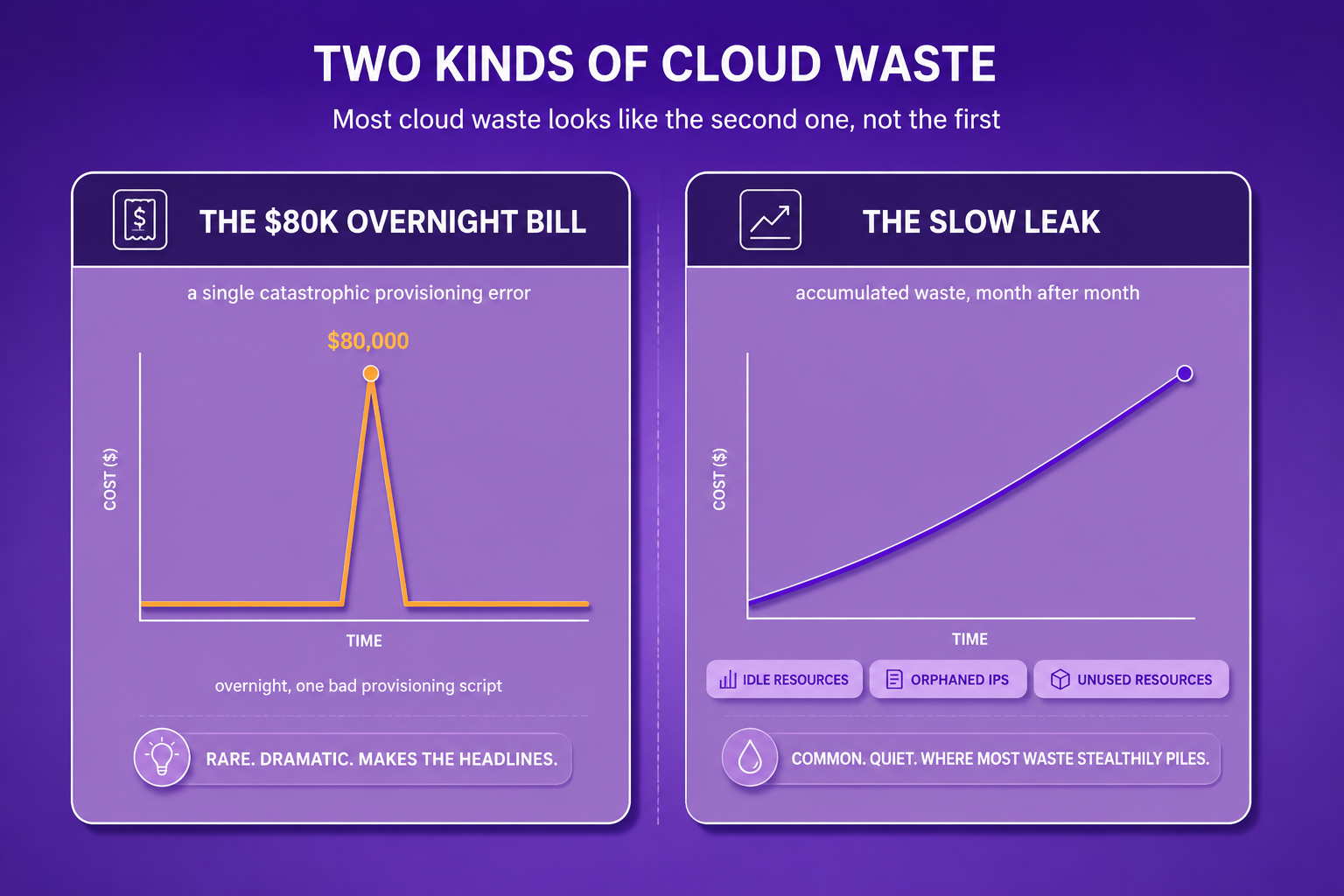
A startup once woke up to an $80,000 AWS bill after a provisioning error left dozens of instances rendering 4K video overnight, a story that made the rounds on Hacker News and still holds up as a warning. The internal system had no upper bound on how much it could spin up, and by the time anyone noticed, the damage was already done. The founders scrambled to cover it, and the company shut down not long after.
Stories like that get the headlines, but the more common version is quieter: a staging environment nobody decommissioned, an Elastic IP still billing after the instance it pointed to disappeared, a tagging gap that makes a cost spike untraceable. This piece covers why DevOps teams end up owning this problem, whether they signed up for it or not, the core principles that hold regardless of which tool gets picked, and a current look at the tools worth evaluating in 2026, including where the landscape shifted from last year's list.
What is Cloud Cost Optimization
Cloud cost optimization is the ongoing practice of ensuring spend matches actual usage and value, not a one-time cleanup before a budget review. That distinction matters because of how cloud billing itself works: a server sitting idle in a data center someone already paid for doesn't cost anything extra. A cloud instance sitting idle keeps billing every hour it's running, whether anyone's using it or not. Pay-as-you-go pricing means inefficiency has a running dollar cost attached to it, instead of just being wasted capacity nobody's thinking about.
"Cloud waste" is the term for anything being paid for that doesn't deliver value. It shows up in a few recurring forms: resources running idle, resources sized larger than the workload actually needs, resources nobody remembers creating, and resources nobody can trace back to a team because they were never tagged. None of these are exotic problems; they're the default outcome of infrastructure that's provisioned quickly and rarely revisited once it's live.
That's the gap that cost optimization tooling exists to close: catching waste continuously instead of during an annual audit, and tying it back to something actionable, a specific resource, a specific owner, a specific fix, rather than a single aggregate number on a monthly invoice. With that baseline in place, it's worth looking at why this work tends to land on DevOps teams specifically, even on teams where nobody explicitly signed up to own it.
Why DevOps Teams End Up Owning Cloud Spend
Cloud cost isn't purely a billing problem. It's tightly linked to how infrastructure is provisioned, deployed, and operated day-to-day, which puts much of it in DevOps territory, whether or not that was the plan.
Autoscaling without an upper limit is the fastest way to burn budget. If an Auto Scaling Group scales out at 50% CPU with no maximum instance count set, a traffic spike can add dozens of EC2 instances that never scale back down without an explicit policy telling them to. A team running a load test against staging once left desired_capacity at 30 for a forgotten environment; nobody was watching it, and it burned through thousands in compute before anyone noticed.
Idle resources keep charging even when nothing's "running." Stopping an EC2 instance and its attached EBS volume still bills per GB-month. Elastic IPs that are not attached to anything still incur hourly charges. Unattached load balancers, idle NAT gateways, and CloudWatch log groups with no retention policy all quietly compound in the same way: a legacy NAT gateway left behind from a subnet nobody touched in over a year is common to find once someone finally looks.
Missing tags make a cost spike untraceable. An OpenSearch cluster can run live for six weeks before anyone notices it's unused, and if it's never tagged, it never shows up in a cost breakdown by team or workload; it just reads as "unallocated" on the bill. Without that attribution, nobody owns the cleanup, and the spend becomes background noise nobody investigates.
High bills eventually freeze engineering work. Once spend crosses a budget threshold, the usual response is a spending freeze or restricted access to on-demand compute. Engineers start queuing for shared staging environments, performance tests get skipped to save money, and teams avoid larger instance types even when a workload genuinely needs one, all of which slows delivery more than the original waste did.
The Five Core Principles Behind Every Good Cost Tool
Every tool in this list, regardless of which cloud or budget it targets, is built around some combination of the same five principles. Knowing them makes it easier to evaluate any tool against what it actually needs to do, not just its feature list.
| Principle | What It Looks Like in Practice |
|---|---|
| Comprehensive visibility | Filtering cost by service, account, region, and environment, not just a single aggregate number. For Kubernetes specifically, map spend down to namespaces or pods, not just node-level billing. |
| Ownership and tagging | Mandatory tags (team, project, environment, expiration) are enforced by IaC pipelines, so untagged resources are automatically blocked or flagged rather than slipping through. |
| Automation over manual review | Cost estimates on every pull request before it merges, and scheduled cleanup for short-lived environments past a defined TTL, instead of a human reviewing spend once a month. |
| Continuous monitoring | Budget alerts and anomaly detection are tied to actual usage patterns and correlated against performance metrics so a legitimate traffic spike doesn't get treated the same as a misconfiguration. |
| Governance and policy enforcement | Service Control Policies or admission controllers that block expensive resource types in development and staging before they are ever created, not a report that flags them afterward. |
With those five in mind, here's how the current generation of tools stacks up.
The Best Cloud Cost Optimization Tools for DevOps in 2026

The tool landscape has moved in a few specific ways since last year's list. ProsperOps, a commitment-management specialist, was acquired by Flexera in January 2026 and now sits inside Flexera's broader FinOps portfolio. Kubernetes-native autonomous optimization, tools that don't just recommend a rightsizing change but apply it, has gone from an emerging category to a standard evaluation criterion for any team running meaningful workloads on EKS, GKE, or AKS. The eight tools below reflect where things actually stand right now.
Firefly
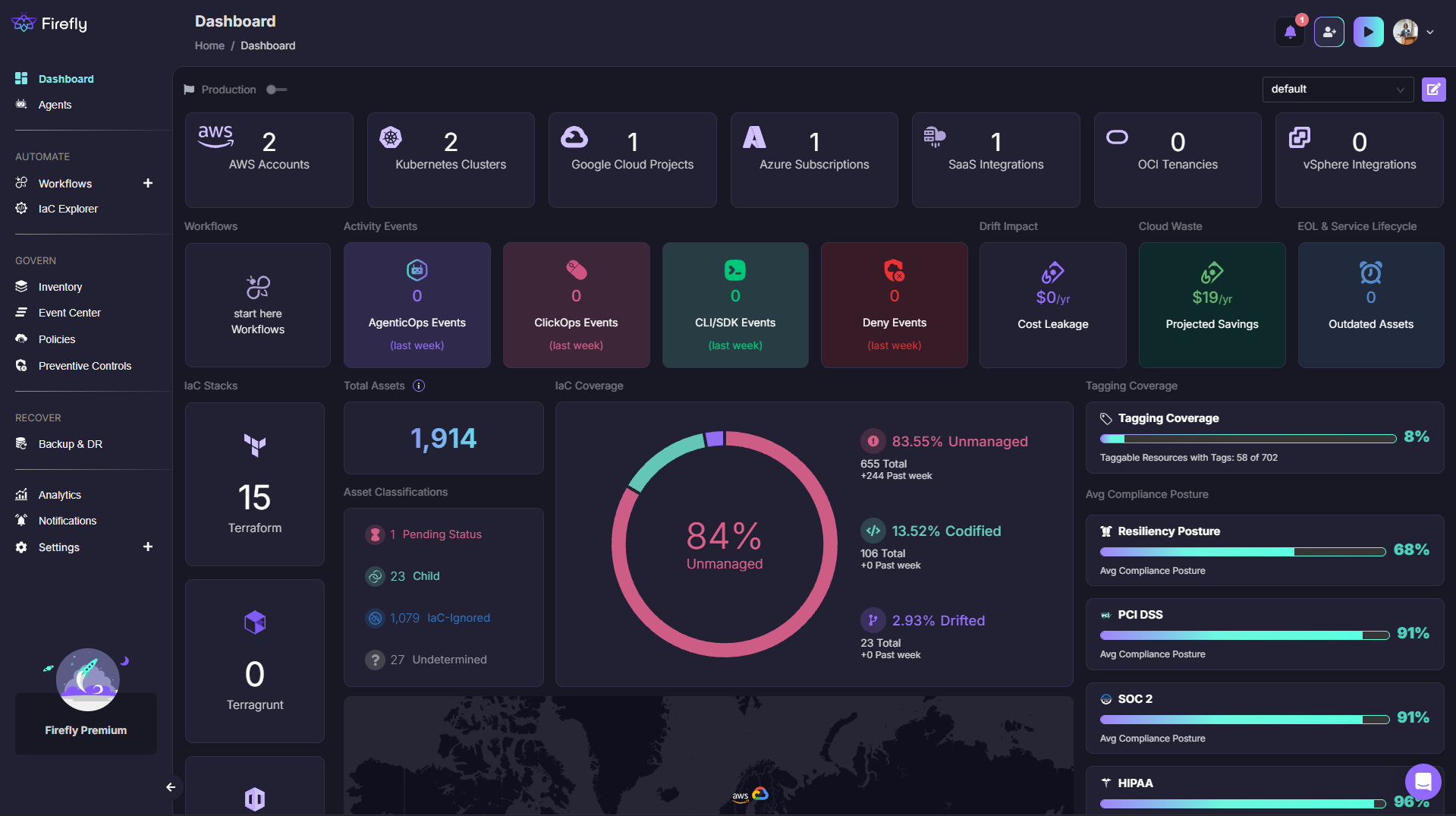
Firefly gives DevOps and platform teams a unified, continuously updated inventory of everything running across AWS, Azure, GCP, and Kubernetes, with read-only access that doesn't require changes to existing pipelines to get set up. What separates it from a pure cost-reporting tool is that waste gets tied directly back to IaC coverage: a resource that was never codified can't be governed, and Firefly's own data shows ungoverned resources are where most waste actually accumulates.
- Cost Visibility tracks spend per resource and surfaces waste patterns (idle instances, unattached volumes, orphaned IPs) with remediation suggestions attached, not just a dollar figure.
- Cost Rules, one of Firefly's four Guardrail types, catch cost increases at the Terraform plan stage, before a change deploys, rather than waiting for next month's invoice to flag them.
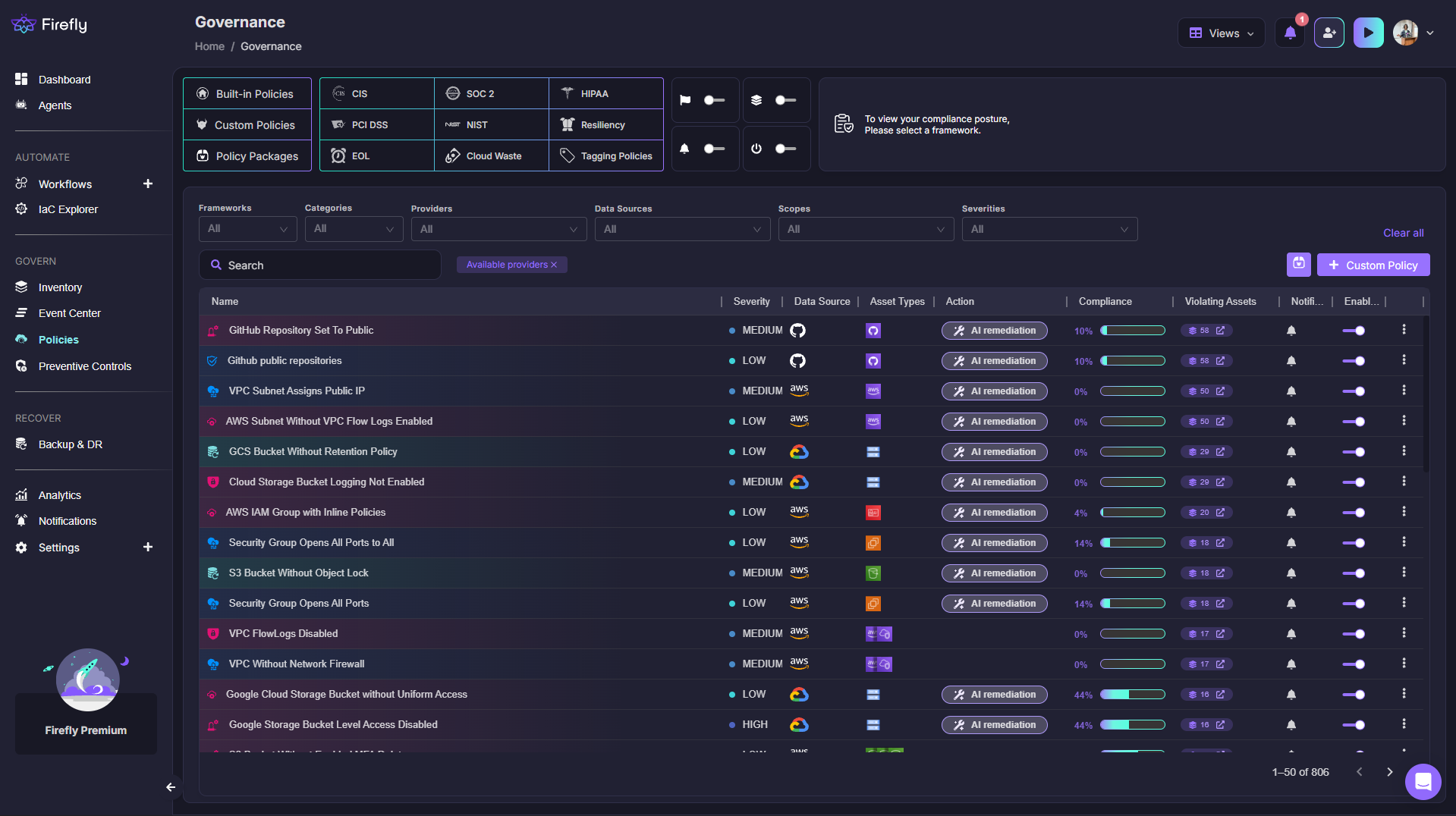
- Cloud Waste is a dedicated policy category on the Governance dashboard, alongside CIS, SOC 2, and Resiliency, so that waste is tracked with the same severity and compliance scoring as a security policy, rather than treated as a separate afterthought.
- AI remediation generates the actual fix, such as a Graviton migration for an overpriced x86 instance, rather than only flagging the issue and leaving the fix to an engineer.
- Alerts route through ChatOps integrations (Slack, Microsoft Teams, PagerDuty, and others), so a cost anomaly appears where the team already works, rather than on a dashboard someone has to remember to check.
- AI SRE, Firefly's in-platform chat interface, answers questions like "which resources are driving the most waste this month" by cross-referencing Inventory, Governance, and Event Center directly, instead of requiring someone to build that view manually.
Cloud Custodian
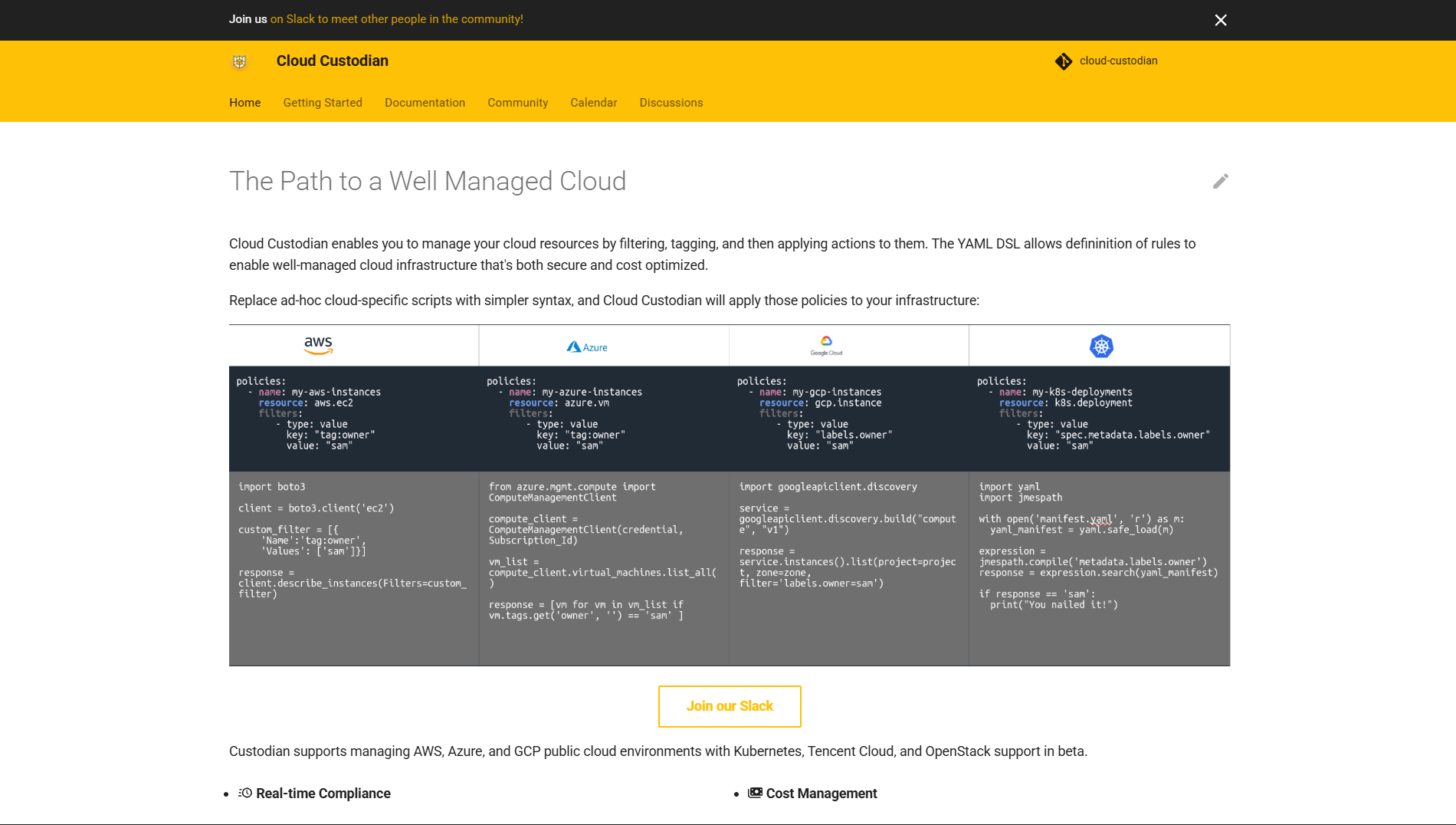
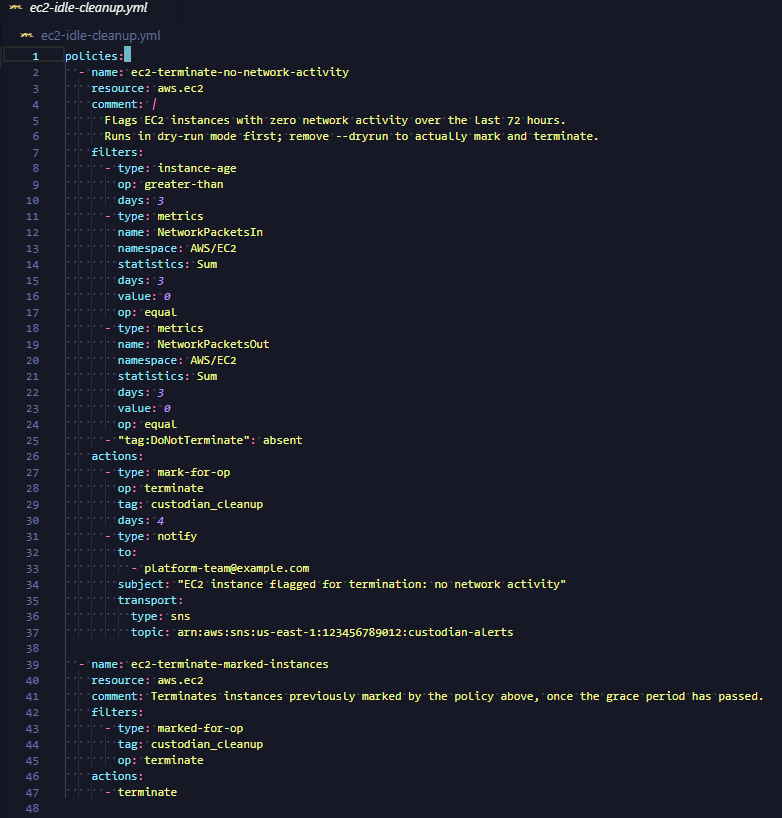
Cloud Custodian is an event-driven, open-source policy engine (a CNCF Incubating project) that governs infrastructure using YAML-defined rules, executed through AWS Lambda or the equivalent on Azure and GCP, reacting to events like resource creation or a metric crossing a threshold. A policy might terminate EC2 instances with no network activity for 72 hours, or quarantine an untagged S3 bucket the moment it's created.
The project hit its 10-year milestone in May 2026, and CNCF used the occasion to reposition it specifically for the agentic AI era: as AI coding agents generate and deploy infrastructure on their own, something needs to enforce cost and security boundaries in real time, closing the window between an AI-generated resource going live and someone noticing it's expensive or non-compliant. That framing extends naturally to GPU fleets and model-serving endpoints too, workloads that are both a bigger cost risk and a bigger attack surface than typical compute.
Policies are composable and version-controlled, and Custodian runs in either audit-only mode or with full remediation enabled, depending on how much automation a team is ready for. It fits teams with a mature cloud estate who want fine-grained, code-based policy control without committing to a larger commercial platform.
OpenCost
OpenCost, a CNCF Incubating project, provides real-time cost allocation within Kubernetes, mapping compute, storage, and network spend down to the pod, namespace, or controller level by combining node and billing data. It's the tool platform teams reach for specifically to answer "which namespace is actually driving this bill," which node-level billing alone can't answer. It's worth being clear about its ceiling: OpenCost measures and allocates costs; it doesn't optimize or automate changes, so teams pair it with an action-taking tool like Cast AI once visibility reveals something worth fixing.
Because it integrates directly with Prometheus, cost data flows into existing Grafana dashboards without a separate reporting layer. In 2025, the project also shipped an OpenCost MCP server, letting AI agents query Kubernetes cost data in natural language and generate recommendations directly from it. It fits naturally into chargeback models or multi-tenant clusters where a specific team needs to clearly see its own cost footprint.

Cast AI
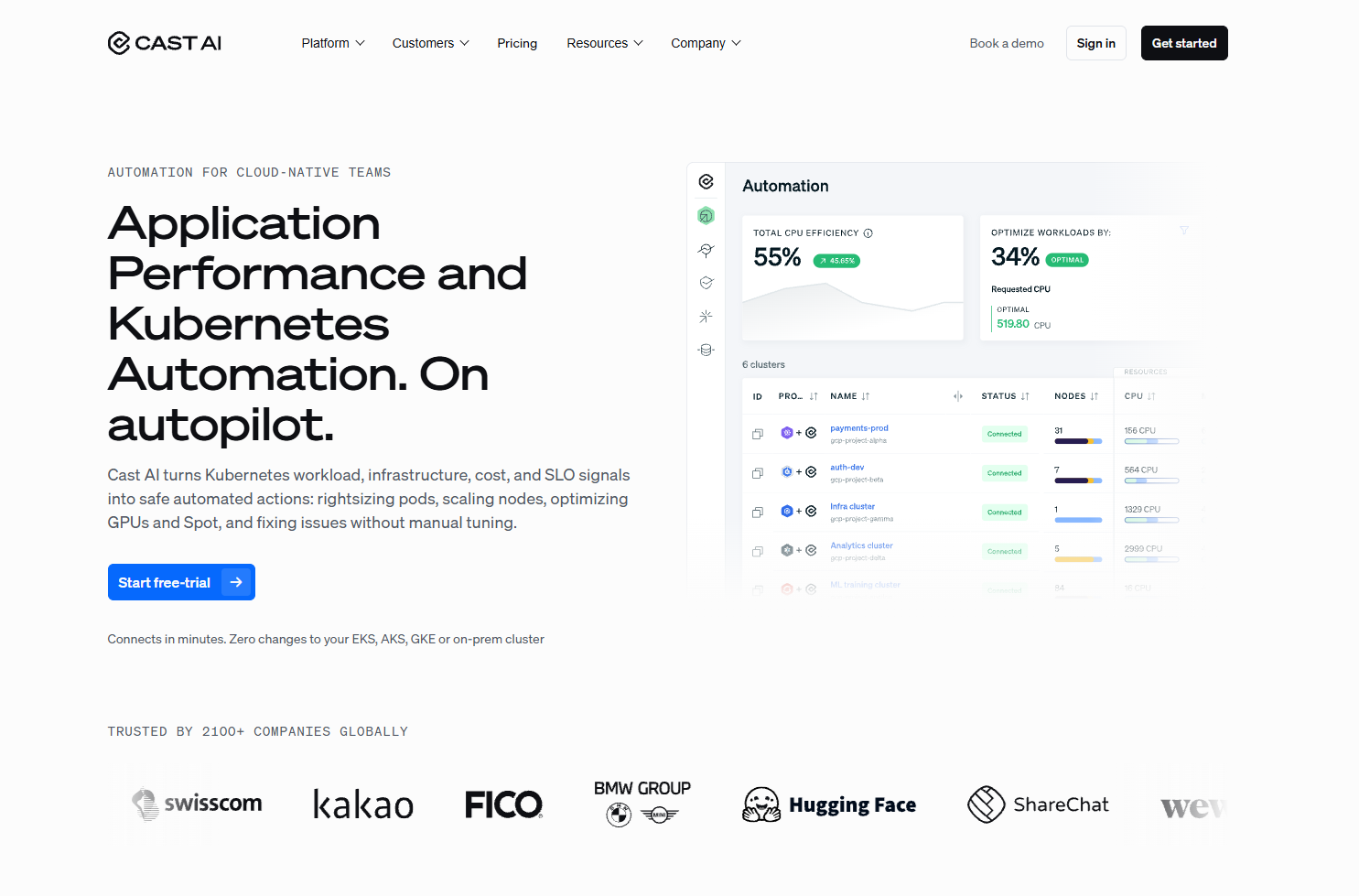
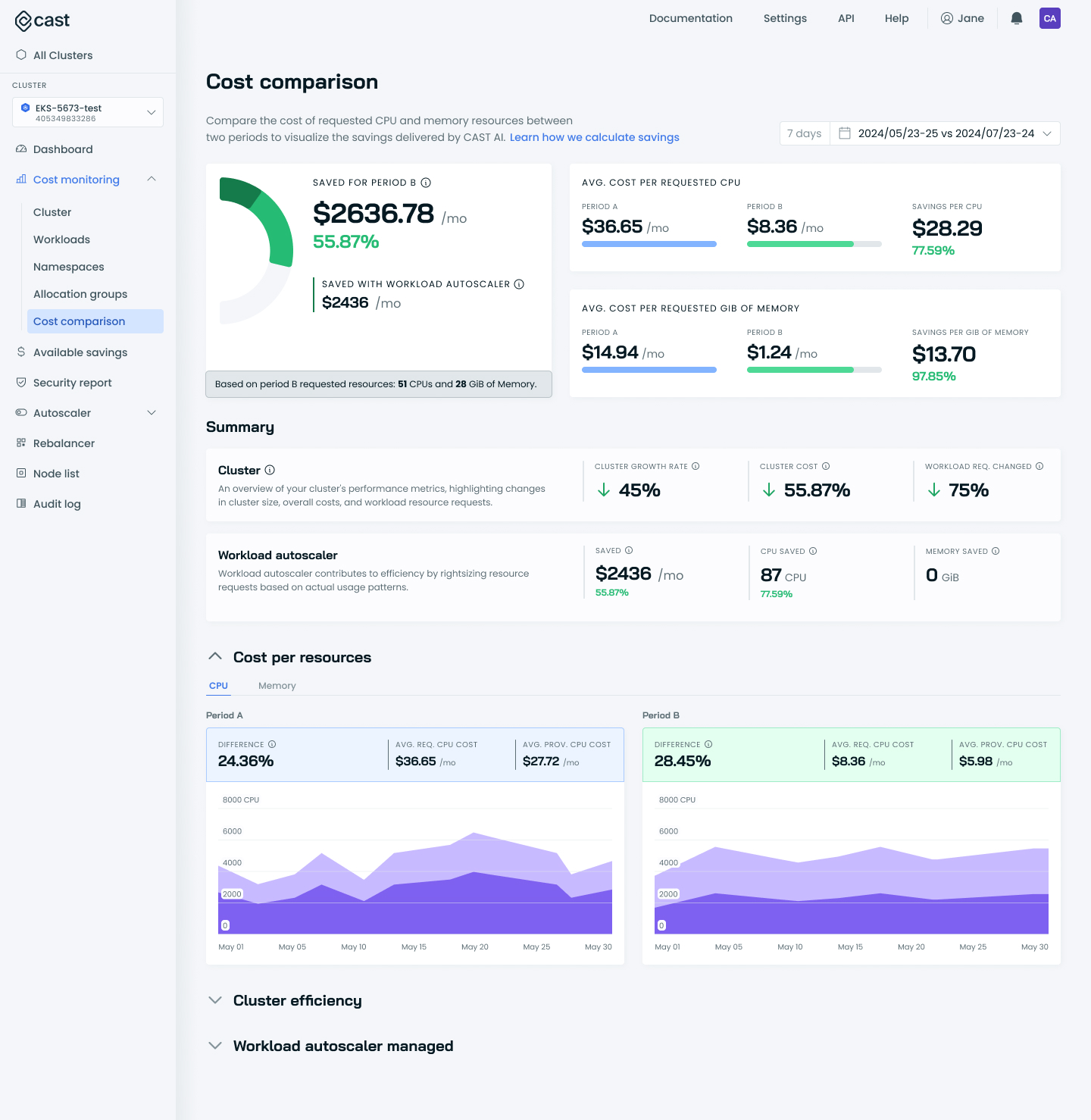
Cast AI has become one of the clearest examples of the shift from cost recommendations to autonomous cost action. Instead of surfacing a rightsizing suggestion for an engineer to apply manually, it continuously rightsizes node pools, shifts eligible workloads to spot instances, and scales clusters against real-time pod demand, applying changes directly when Autopilot mode is enabled rather than waiting for a human to click approve.
The scale of the problem it's addressing is larger than most teams assume. Cast AI's own 2026 State of Kubernetes Optimization Report, drawn from tens of thousands of clusters, found average GPU utilization sitting at just 5%, with CPU at 8% and memory at 20% across clusters that hadn't yet enabled any automated optimization. That's the gap autonomous rightsizing is built to close.
It fits teams where 70% or more of compute runs on Kubernetes across EKS, GKE, or AKS, and where the team is comfortable letting automated changes run after an initial tuning period establishes trust in the recommendations. Teams early in their Kubernetes adoption, or those that want every change reviewed first, may prefer a recommendation-only tool until trust is built.
OptScale
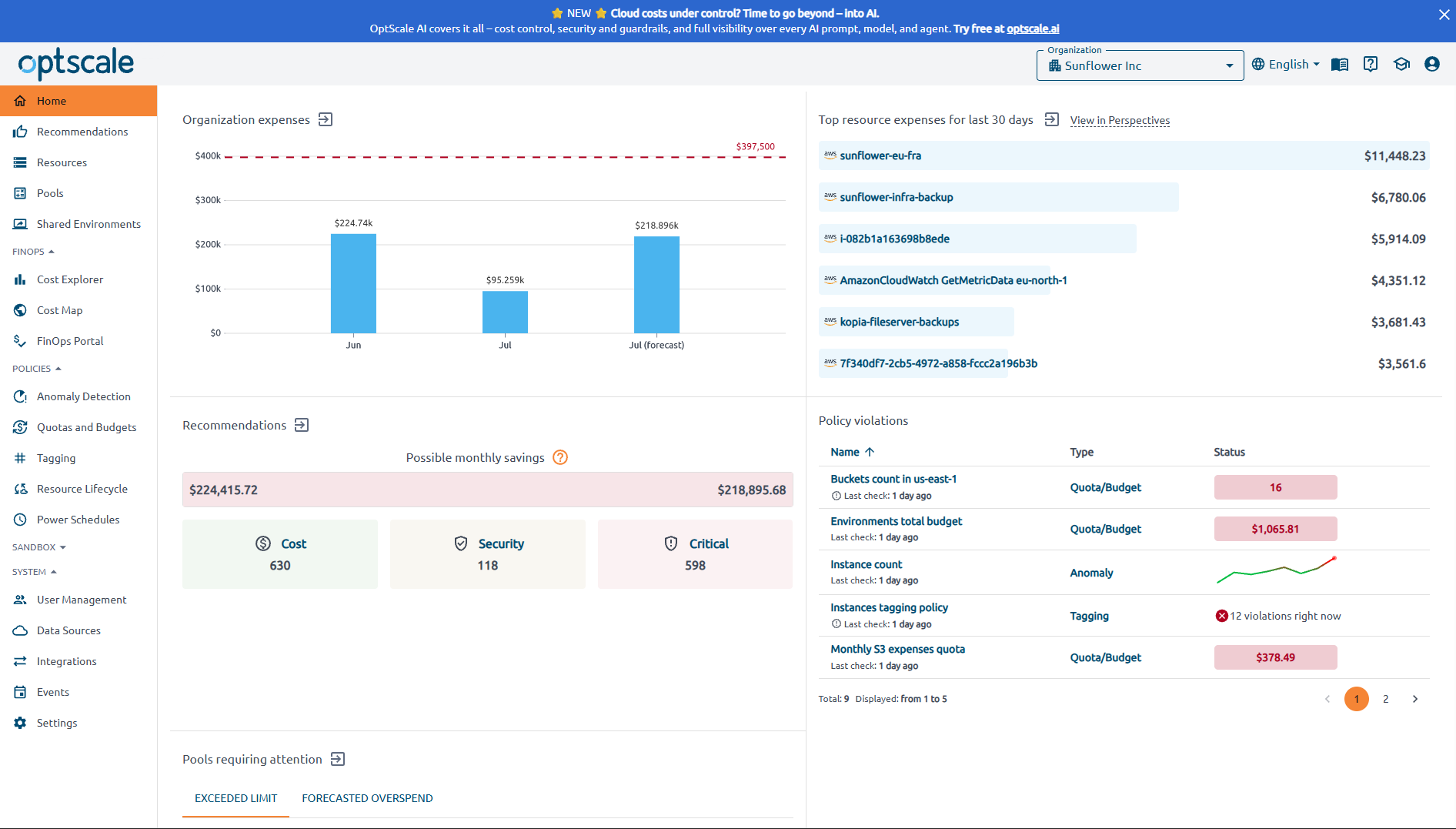
OptScale is an open-source FinOps platform under Apache 2.0, supporting AWS, Azure, GCP, Alibaba Cloud, and Kubernetes, with rightsizing, anomaly detection, and Reserved Instance and Savings Plan recommendations built in. It's self-hostable, which is worth knowing for teams that want FinOps tooling without sending billing data to a third-party SaaS platform.
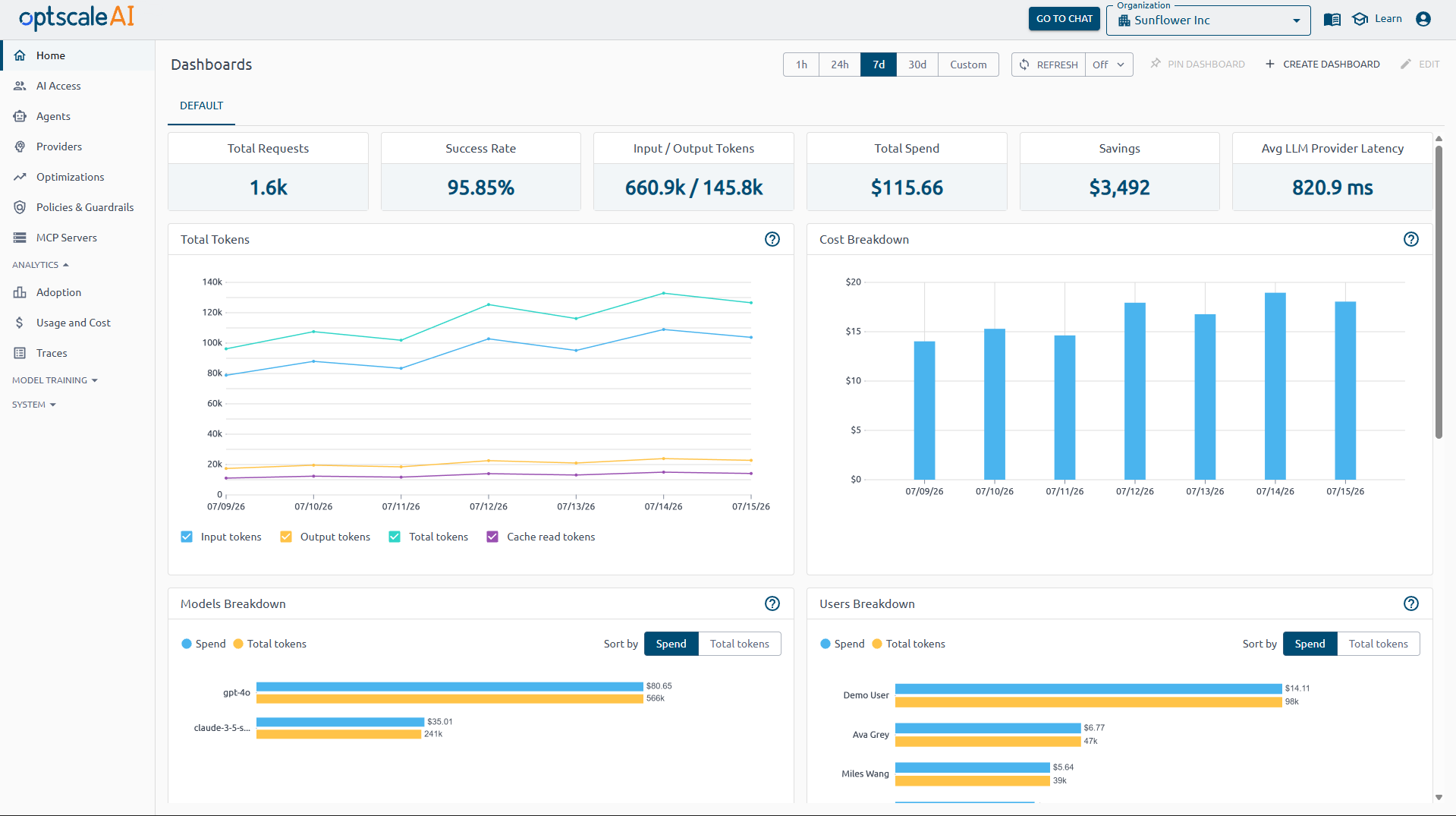
In May 2026, OptScale launched OptScale AI, extending the platform into AI cost governance with four components: an AI Gateway that routes requests between local and public models to cut LLM costs by up to 40%, Security & Guardrails for content filtering and PII protection, usage analytics and tracing, and pre-defined agent roles backed by more than 20 MCP connectors for governing what AI agents are actually allowed to do. For teams whose AI spend has begun to appear as a separate, unpredictable line item, that extension is worth a look alongside the core FinOps features.
Komiser
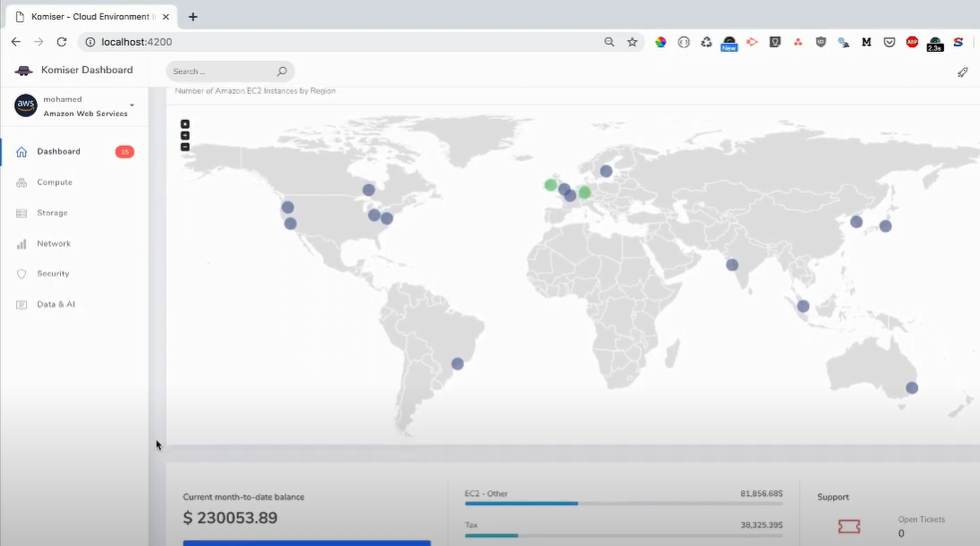
Komiser is a lightweight, source-available tool for fast visibility into cloud usage, licensed under Elastic License 2.0 rather than a traditional OSI-approved open-source license, which matters mainly for anyone considering reselling it as a hosted service. It supports a wide provider list, AWS, GCP, Azure, DigitalOcean, OCI, Linode, Tencent, Scaleway, and MongoDB Atlas, and is simple enough to self-host without much setup overhead. It's built to answer one question quickly: what's actually running across these accounts, and what's obviously unused.
It flags idle load balancers, unattached EBS volumes, and missing cost tags without requiring a larger platform commitment. A hosted Komiser Cloud option is now available in private beta alongside a paid Enterprise edition for teams that outgrow the self-hosted community version. It's a practical starting point for a team beginning FinOps practices from close to zero, or one that wants a quick inventory pass before deciding whether a bigger tool is worth the investment.
Infracost

Infracost has grown well beyond a PR-comment tool into what it now calls cloud cost intelligence for engineers, AI coding agents, and CI/CD. Running terraform plan through Infracost still generates a diff showing exactly how much a proposed change will cost or save, and its GitHub Actions and GitLab CI integrations still post that diff as a comment directly on the pull request, so cost stays part of code review instead of a surprise after merge. Support now extends past Terraform to Terragrunt, CloudFormation, and AWS CDK as well.
The bigger shift is infracost/agent-skills, which plugs directly into Claude Code, Cursor, and other AI coding agents, so a coding agent reasons about cost and tagging policy as it generates infrastructure code, rather than a human catching an expensive resource type after the fact. An accompanying LSP server surfaces cost hints inline as .tf and CloudFormation files are edited, before a PR even opens.

Koku
Koku is the open-source upstream project behind Red Hat Lightspeed Cost Management, purpose-built for organizations that need cost visibility across public clouds and OpenShift without sending financial or usage data outside their own infrastructure. It normalizes and attributes spend across AWS, Azure, GCP, and OpenShift, including cost correlation for managed OpenShift offerings like ROSA and ARO, and it's the only FinOps tool in this list that meters OpenShift running on IBM Z, LinuxOne, and POWER architectures, not just x86-64 and ARM.
Recent releases have added GPU cost tracking, including support for NVIDIA Multi-Instance GPU (MIG) environments, along with efficiency scores that compare requested resources against actual consumption at the fleet, cluster, and namespace levels. It's aimed squarely at enterprises and sovereign cloud or regulated environments that need internal chargeback reporting and can't rely on a SaaS platform to hold that data. Teams running a mostly public-cloud stack with no OpenShift footprint will likely find a lighter tool a better fit.
Getting Started With Firefly for Cloud Cost Optimization
Firefly's approach centers on connecting cost data directly to IaC coverage, so waste is tied to a governable resource rather than sitting in a separate report that nobody acts on. Here's what that looks like in practice, from initial connection to an alert landing in Slack.
Step 1: Connect Cloud Accounts for a Complete Inventory
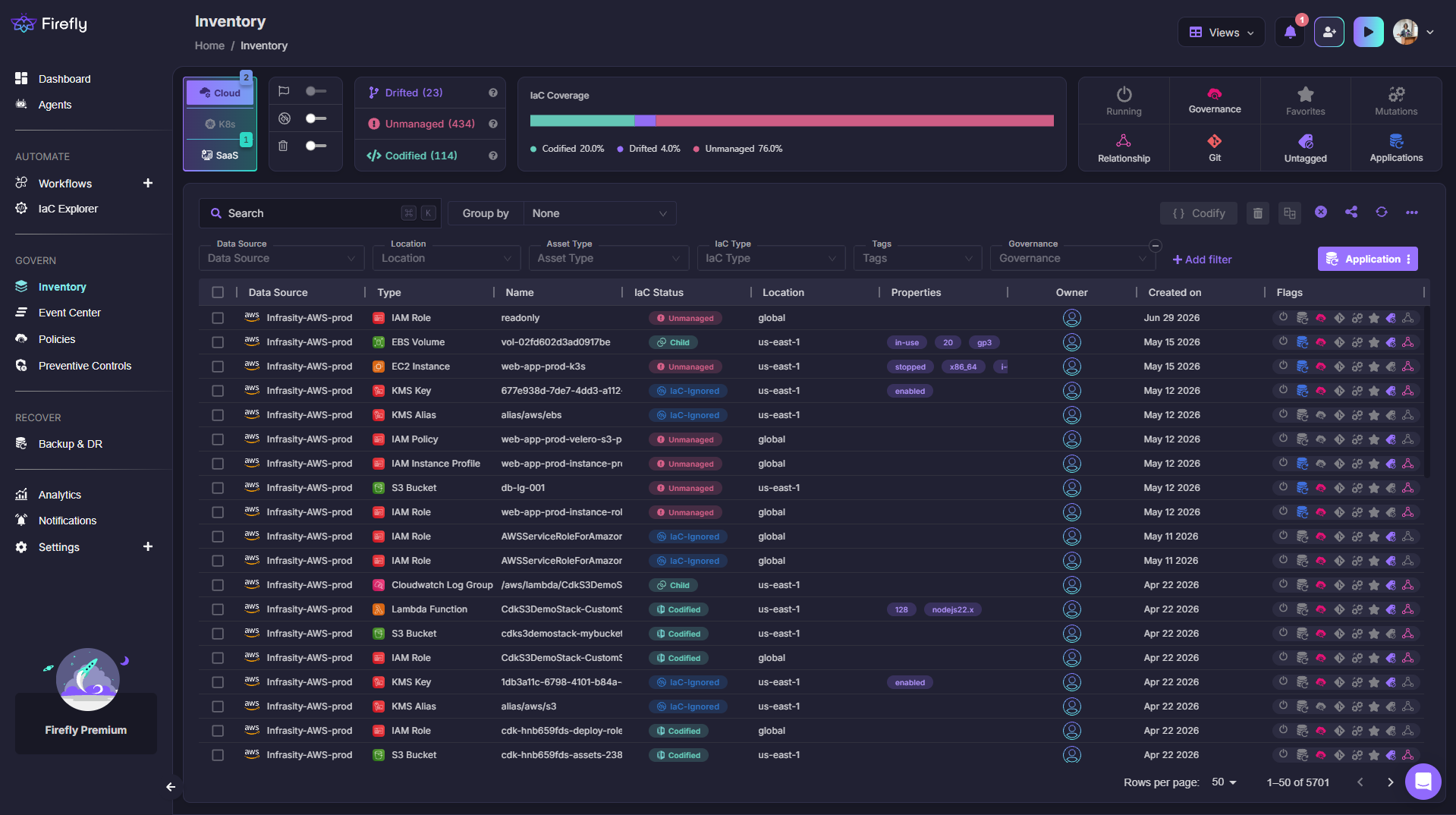
Connecting AWS, Azure, and GCP accounts with read-only access enables Firefly to ingest both resource metadata and IaC sources (Terraform, CloudFormation, Helm) to build a single, continuously updated inventory. This isn't just a resource list; each entry maps back to its IaC definition if one exists, flags drift, and surfaces missing tags or orphaned assets in the same view.
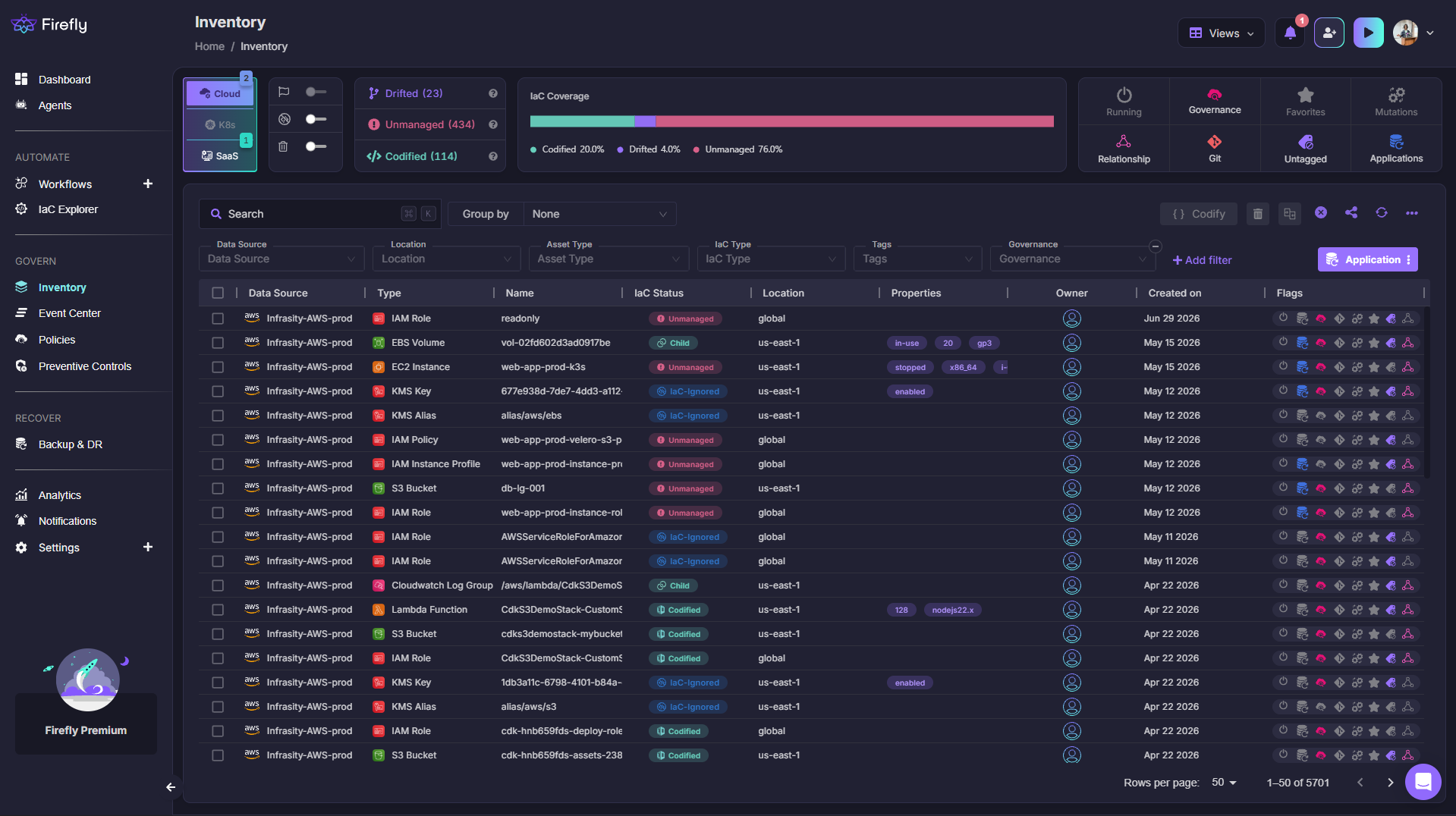
Step 2: Identify and Quantify Cloud Waste
Firefly's Cloud Waste policies evaluate resource utilization and configuration to flag where optimization would have a real financial impact, factoring in instance type, storage size, and network usage rather than just flagging anything idle. An unmanaged EC2 instance running at minimal CPU utilization, missing tags, and outside any IaC configuration gets surfaced with its instance ID, state, architecture, and region attached, so there's enough context to act on it without pivoting to the AWS console.
A common example: an EC2 instance still running on x86 when a Graviton-based equivalent would cost less and run more efficiently. Firefly flags this pattern specifically and can generate the remediation directly.
Step 3: Set Up Cost Anomaly Notifications
Firefly's notification system tracks spend at the resource level and flags abnormal spikes in real time, rather than waiting for a monthly summary. A misconfigured or oversized resource, an instance running in the wrong region, or an instance size too large for its workload triggers an alert that's routed to Slack, email, or PagerDuty, with the resource ID and the specific anomaly attached, so the investigating team doesn't have to reconstruct the context from scratch.

Step 4: Investigate Anomalies With AI SRE
An alert says something spiked. It doesn't say why, and tracing that manually usually means pulling up Inventory, Governance, and the resource's change history in three separate tabs before the actual cause becomes clear. AI SRE, Firefly's in-platform chat interface, skips that step: asking "why did spend spike in the staging account this week" returns a ranked answer pulled from the same underlying data, with the specific resources responsible and what changed about them, instead of a dashboard link and a "good luck."

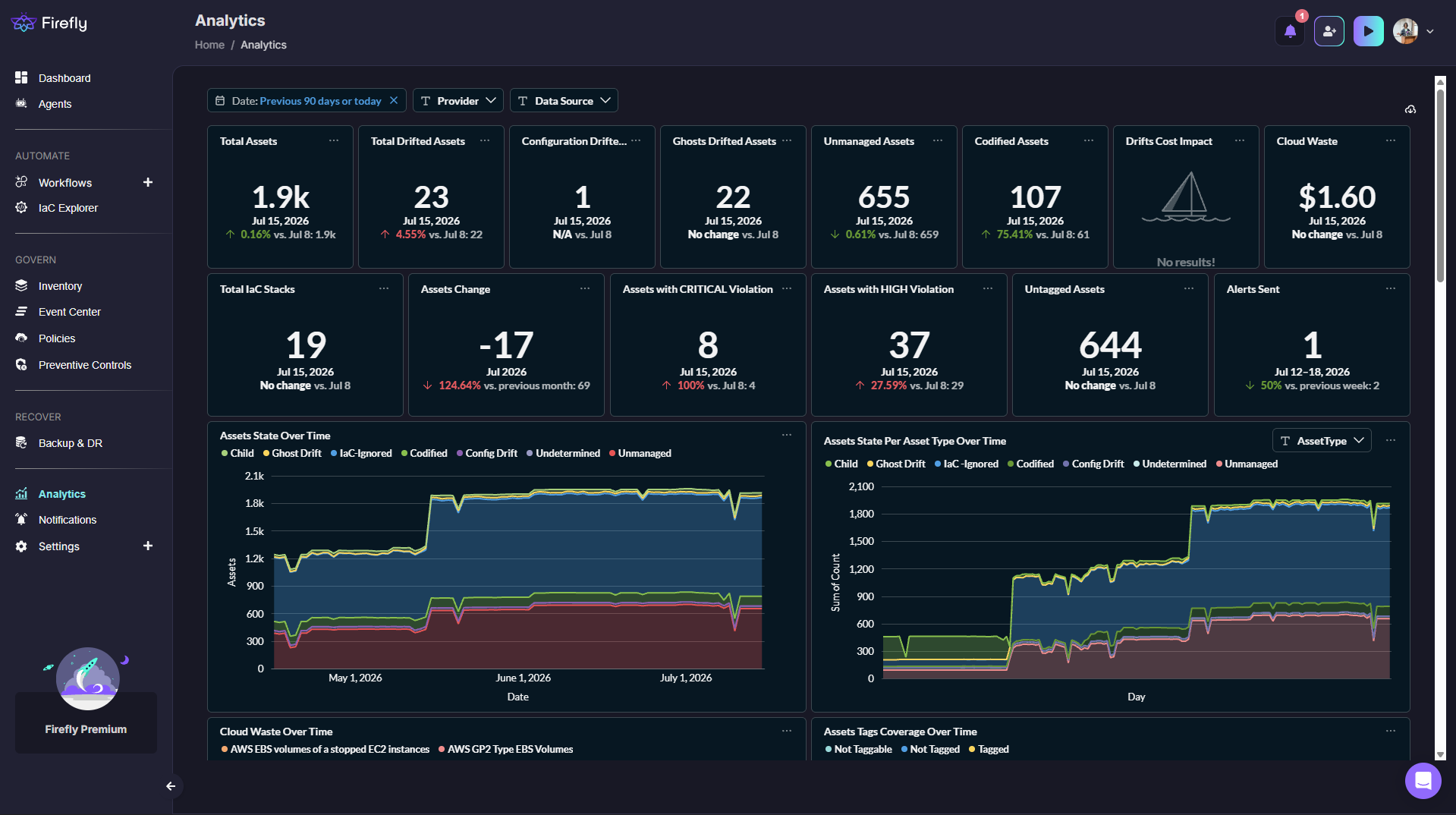
Step 5: Track Everything in One Analytics View
Firefly's Analytics dashboard pulls cost anomalies, governance violations, and drift into a single real-time view, so a platform team doesn't have to correlate three separate reports to understand what's actually driving spend and risk at any given moment.
Cloud Cost Optimization Best Practices Worth Repeating
- Enforce tagging at the pipeline level, not as a convention teams are asked to remember. Every resource should carry project, team, environment, and owner tags before it deploys, not after someone notices it's missing.
- Automate lifecycle management for short-lived environments. A TTL in a test environment that is actually enforced prevents the slow accumulation of forgotten staging clusters and databases.
- Put cost visibility inside the pull request, not in a separate finance dashboard that nobody on the engineering side opens regularly.
- Schedule audits instead of waiting for a bill spike to trigger one. A monthly or biweekly review catches drift and waste while it's still small.
- Codify cost policies instead of relying on manual review. A policy-as-code rule blocking an oversized instance type in a dev account catches the problem before it deploys, which a report never can.
To go deeper on the FinOps side specifically, Firefly's FinOps use case page covers how cost visibility ties into the rest of the governance stack.
FAQs
How can I effectively eliminate cloud waste?
The most effective approach combines continuous discovery of idle, orphaned, and untagged resources with policy-as-code enforcement to prevent the same waste from recurring. Detection alone doesn't fix anything; the fix has to be automated or at least generated for review, or the same pattern of waste just recurs the following month.
What's the difference between a cloud cost optimization tool and a FinOps platform?
A cost optimization tool typically focuses on identifying and eliminating waste, rightsizing, detecting idle resources, and enforcing policies. A full FinOps platform adds allocation, chargeback, forecasting, and cross-team financial workflows on top of that, aimed more at finance and FinOps practitioners than at engineers making day-to-day provisioning decisions.
Are open-source cloud cost tools good enough, or do teams need a commercial platform?
Open-source tools like Cloud Custodian, OpenCost, and Komiser are genuinely capable of providing visibility and enforcing policies, and plenty of teams run entirely on them. The tradeoff shows up in setup and maintenance time, and in whether a tool ties cost specifically back to IaC coverage and drift, which most standalone cost tools don't do natively.
Why does Firefly tie cost optimization to IaC coverage?
An unmanaged resource, one that exists outside any Terraform or IaC definition, can't be governed by policy the way a codified resource can. Firefly's data shows this is where most cloud waste actually accumulates, so closing the IaC coverage gap and reducing cost waste end up being largely the same problem.
Does Firefly replace tools like Infracost or OpenCost?
Not entirely. Infracost's PR-level cost diffs and OpenCost's Kubernetes-native pod-level allocation solve specific, narrow problems well, and many teams run them alongside Firefly rather than instead of it. Firefly's role is the broader governance and inventory layer that ties cost waste back to IaC coverage, drift, and policy across the whole environment, not a replacement for every specialized tool in this list.

.avif)
.avif)
.webp)


.webp)