Enterprise Cloud Management:
The Resource Hub
Your definitive, bookmarkable resource for taming enterprise cloud complexity at scale.
The Cloud Challenges You
Face at 1000+ Accounts? Solved.
As your business grows, you now face:




Inventorying your infrastructure is just the first step to understanding and uncomplicating your cloud. Here's a look at today's most common enterprise cloud management challenges, plus proven fixes from practitioners.
Everything you need to know about enterprise cloud management





Real-World Wins at Scale: Why Firefly?
.svg)

"[At one point we were] migrating our build servers from an on-prem data center to AWS, using a feature that launches an Ami. But the Ami definition that we were using was not set up to remove the volumes. So we had 50 or 100 instances getting launched every day: each leaving its volumes behind, growing exponentially. That's behind us now."
Read the case study →
"I would highly recommend Firefly for any team who wants to have a centralized cloud asset catalog, across all vendors, that also helps you move faster, build more advanced solutions, and improve overall engineering efficiency."
Read the case study →
Our primary goal was to get all our resources in Terraform: to be fully codified and compliant, so we can migrate resources and configurations for disaster recovery, if we ever had to rebuild or spin the code back up. Firefly was the key to that.
Read the case study →Finally, you can say goodbye to Terraform Cloud. But here’s when you shouldn’t:


.svg)

If you are certain that you have full visibility of your assets, even across multi-cloud environments
Your cloud is constantly scanned for issues, and you already know what percentage of your cloud is codified in IaC and unmanaged, plus what has drifted from Terraform. Everything is well-documented in case of disaster.
Compare Firefly to HCP Terraform →If you love adding yet another tool to your existing tech stack, or relying on an additional CI/CD platform that doesn't integrate into your current workflow
For organizations where Firefly isn’t a fit, IaC automation is simply not a priority.
Compare Firefly to HCP Terraform →If naive codification without support for dependencies or modules is “good enough”
You also may need to be a fan of doing unnecessary manual work instead of using templates (or modules), or enjoy using crappy code that doesn't follow best practices.
Compare Firefly to HCP Terraform →If not having any asset history or change log makes you feel like a daredevil, and you enjoy the challenge of solving problems when you can't see what changes were made, or who made them
Your team doesn’t care to be able to roll back to previous versions, and already feels confident in their ability to pass auditing and do troubleshooting as is.
Compare Firefly to HCP Terraform →If, for your team, ensuring that deployments and configurations are within policy is more effective when handled manually
In this scenario, your DevOps engineers are uncharacteristically impervious to human error.
Compare Firefly to HCP Terraform →If, in the event of an incident, your engineers would rather re-create your configurations than keep them centrally documented
Chaos is the spice of life, and you believe that redoing work is the cornerstone of positive morale.
Compare Firefly to HCP Terraform →Thinking it might
be time to replace
HCP Terraform?

01
Scanning
TFC workspaces and projects

02
Creating
Corresponding Firefly projects and workspaces

03
Migrating
Terraform state

04
Modifying
Backend configuration files

05
Running
In your IaC pipelines with Firefly
Resources for diving even deeper
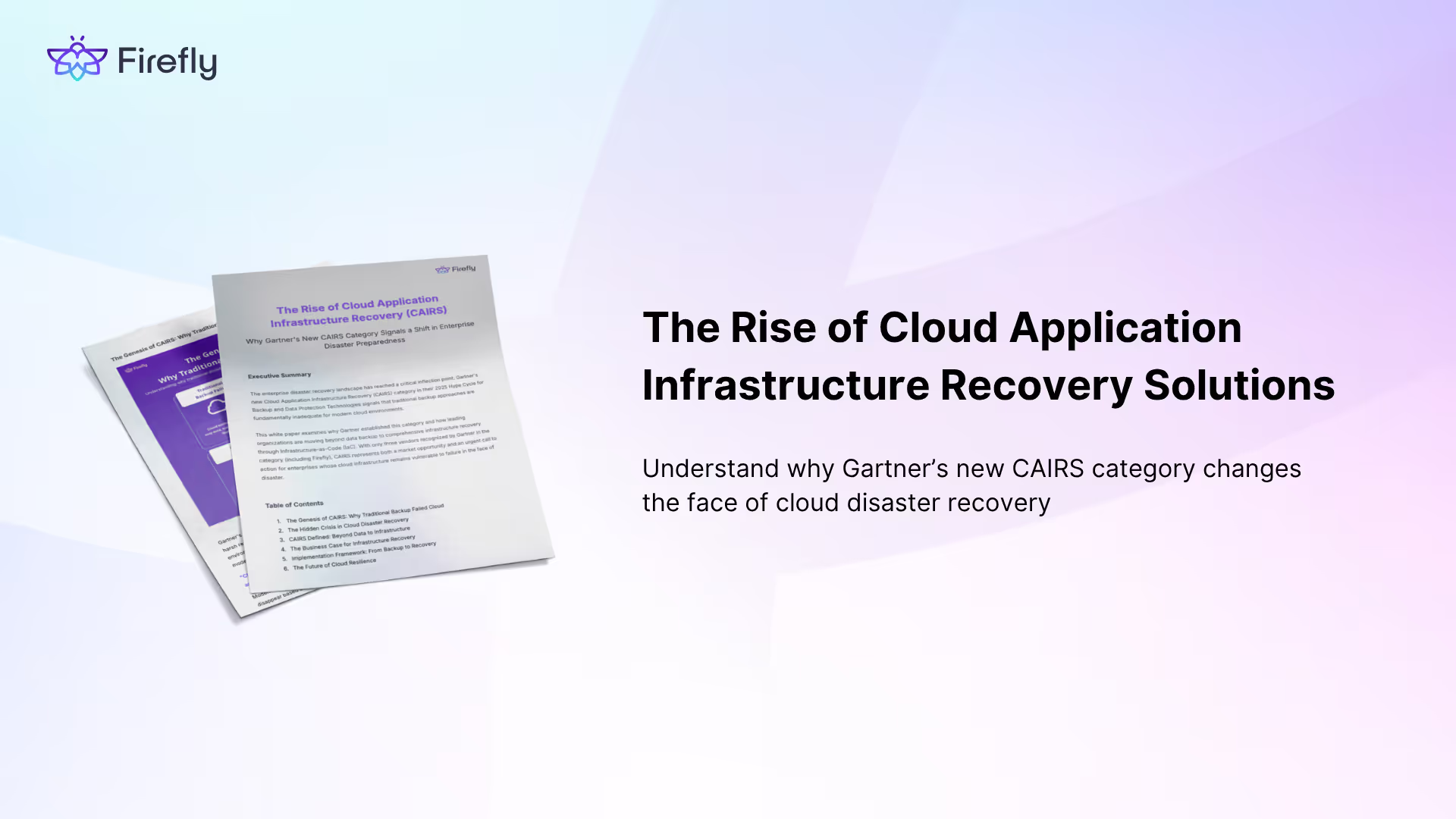
Explore Gartner's New DR Category: Cloud Application Infrastructure Recovery Solutions

Translate the Value of Cloud to Your Executive Team and Your Board
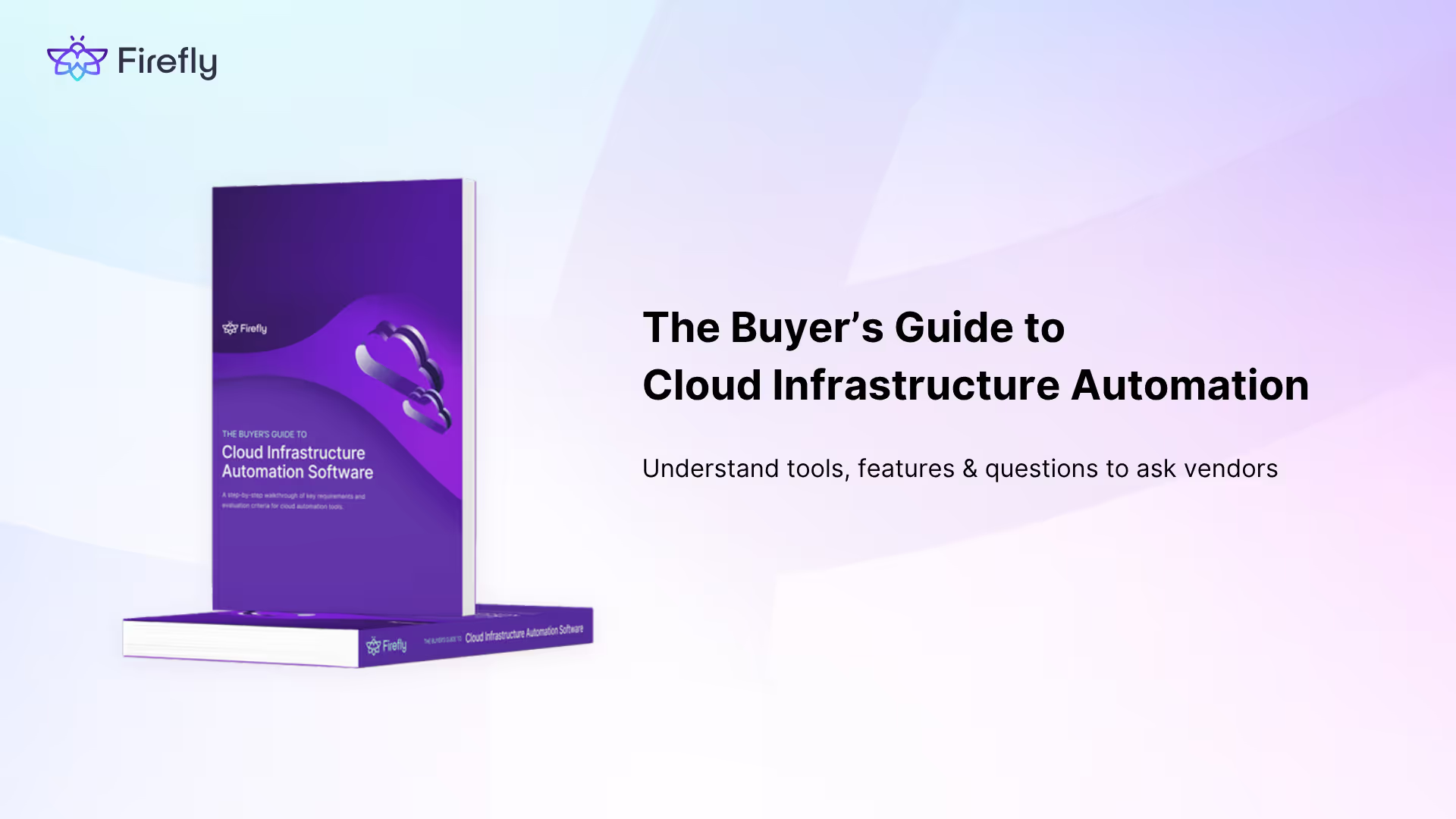
Explore the Key Buying Criteria for Cloud Infrastructure Automation Tools
Enterprise Infrastructure Requires Enterprise-Ready Solutions
When your infrastructure supports billions in revenue and thousands of employees across global ops, you can't afford to manage it with platforms that can’t scale or integrate with your existing stack. Firefly offers total enterprise cloud management control across your cloud providers, IaC frameworks, and SaaS apps, like Okta and Datadog.
.webp)


.webp)